









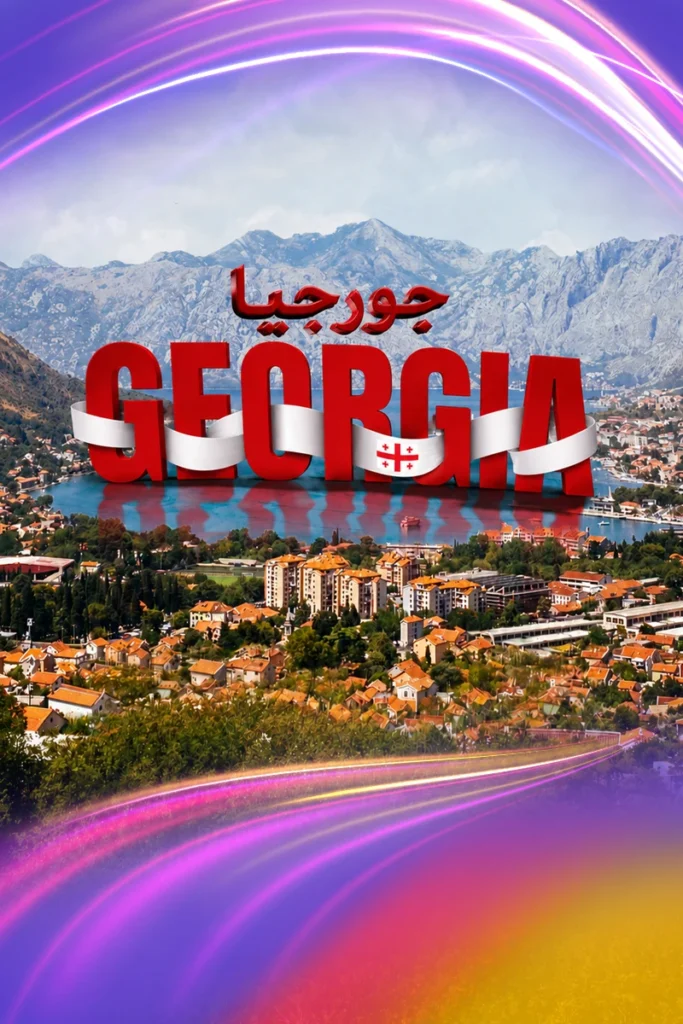











































Tourism in Georgia: Explore Mountains, Culture, and History
Many travelers book three nights in Georgia, spend the entire trip wandering through Tbilisi’s Old Town, and return home without seeing a single mountain or vineyard in Kakheti. The distance between the Black Sea coast and the Caucasus peaks is shorter than you might expect, but exploring both requires planning rather than improvisation.
In this guide to tourism in Georgia, we will introduce you to the country’s main destinations, expected travel costs, and the best ways to move between its regions.
Where Is Georgia, and How Far Is It from the Gulf?

Georgia is located in the South Caucasus, on the eastern coast of the Black Sea, between Turkey, Armenia, and Azerbaijan. It is closer to the Gulf than many travelers realize:
- Flight duration: Around three to four hours from most Gulf cities.
- Main airports: Tbilisi International Airport (TBS), Kutaisi International Airport (KUT), and Batumi International Airport (BUS).
- Direct flights: Seasonal flynas services operate from Riyadh, Jeddah, and Dammam. Year-round and seasonal routes may also be available from Doha, Kuwait, Dubai, Sharjah, Abu Dhabi, and Bahrain.
- Seasonal note: Direct services are more frequent in summer and less common in winter, so early booking is recommended.
When a suitable round-trip itinerary is unavailable with one airline, almatar’s Mixfly service allows you to combine the outbound and return journeys on two different airlines within a single booking.
What Is New in Tourism in Georgia?
Mandatory Health Insurance for Visitors
Every tourist entering Georgia must carry valid health and accident insurance covering the entire stay, including the arrival and departure dates. The policy may be presented electronically or on paper and must be available in Georgian or English.
Border officials may ask to see proof of insurance, so arrange your policy before traveling.
Visa-Free Entry for GCC Citizens
Citizens holding passports issued by Gulf Cooperation Council countries can enter Georgia without a visa and may stay for extended periods.
Different requirements may apply to GCC residents of other nationalities, particularly regarding the type of residence permit they hold and its validity on the date of entry. Before purchasing tickets, check the latest rules through Georgia’s official consular website.
Because travel plans sometimes change after booking, almatar’s Golden Guarantee gives you greater flexibility to modify or cancel eligible reservations according to the applicable terms and conditions.
Tbilisi, Georgia’s Capital: The Natural Starting Point

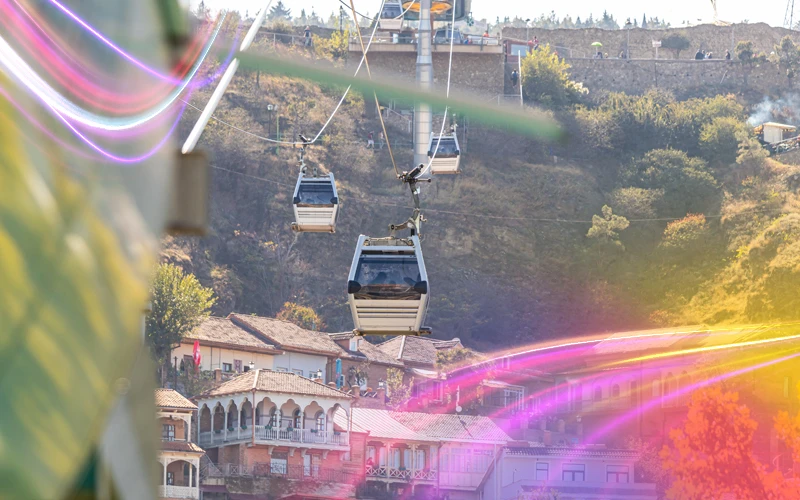
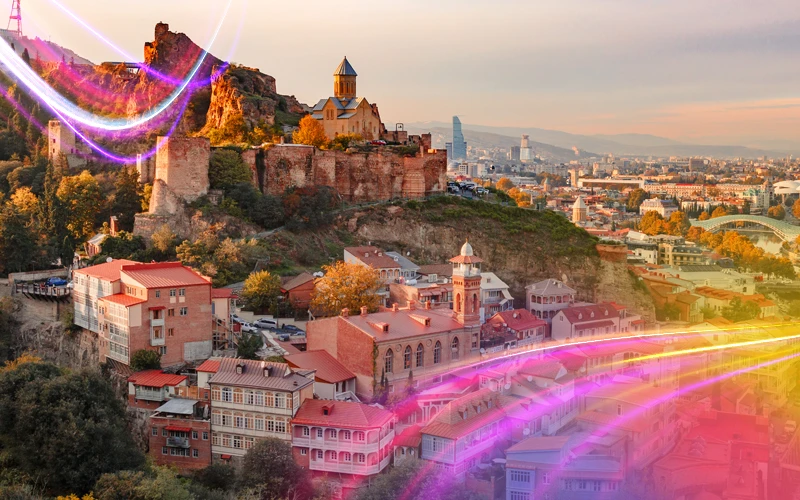
Tbilisi’s Old Town can be captured in one view: the domes of the sulfur baths in Abanotubani beneath Narikala Fortress.
Entry to the fortress is free, and the easiest way to reach it is by taking the cable car from Rike Park. The journey costs around GEL 2.5 and can be paid with a Metromoney card. Two to three days are usually enough to explore the city’s main areas.
For a complete guide to its neighborhoods, attractions, and activities, read [Tbilisi: Top Tourist Attractions and Activities in Georgia’s Capital].
Where to Stay: Best Hotels in the Georgian Capital
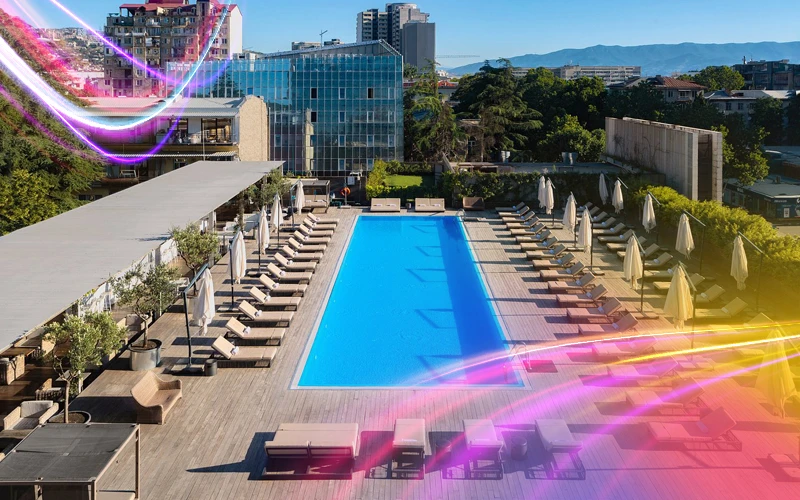

- Holiday Inn Tbilisi by IHG: An upscale and romantic four-star hotel.
- Pullman Tbilisi Axis Towers: A highly rated five-star hotel.
- Hotels & Preference Hualing Tbilisi: A family-friendly five-star hotel.
- Tbilisi Marriott Hotel: A five-star property suitable for business travelers.
- Paragraph Freedom Square, a Luxury Collection Hotel, Tbilisi: A five-star hotel with a central location in the capital.
These are among the hotels recommended by almatar for travelers planning to visit Tbilisi.
When booking hotels in Georgia, always check whether flexible cancellation options are available. The Golden Guarantee can provide additional peace of mind when your reservation qualifies.
From Batumi’s Beaches to the Peaks of Kazbegi
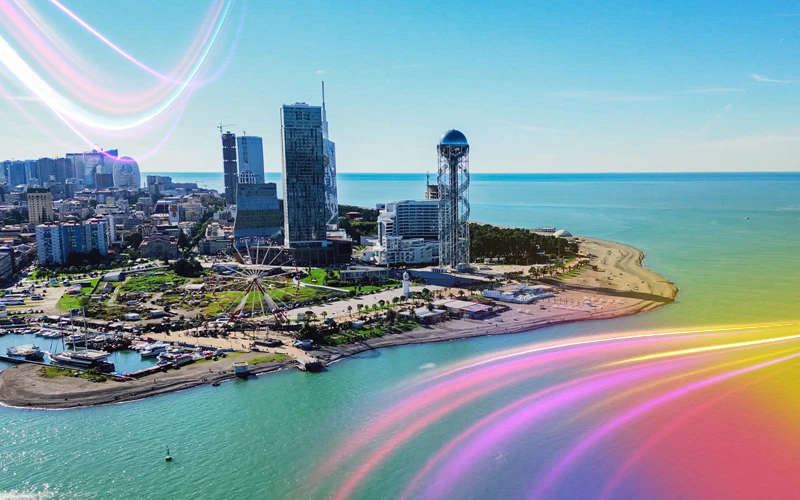
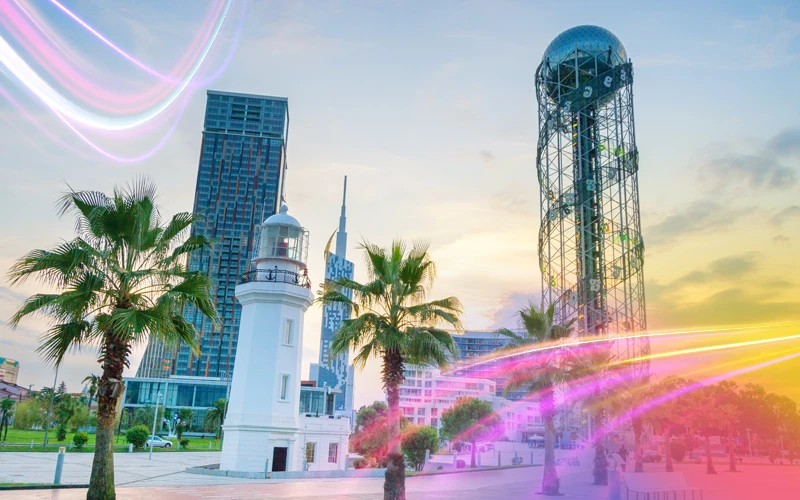
Batumi is a coastal city on the Black Sea in the Adjara region. It is known for its long boulevard, botanical garden, and Alphabetic Tower. It is also one of the easiest Georgian destinations for Gulf travelers seeking halal food.
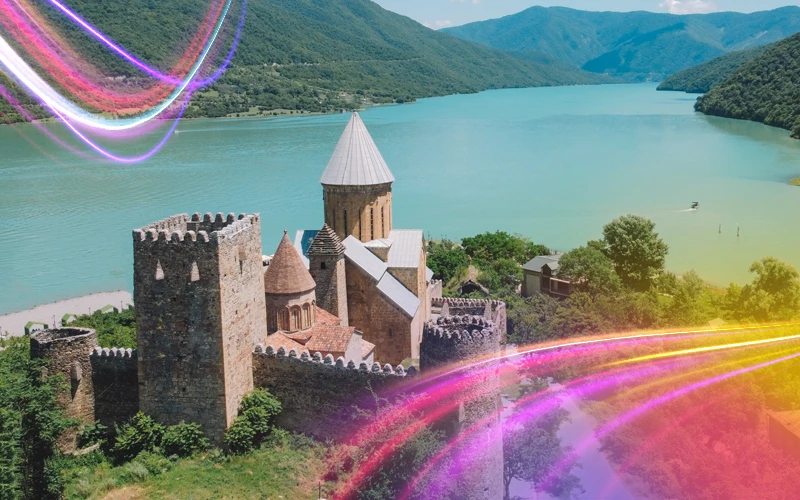
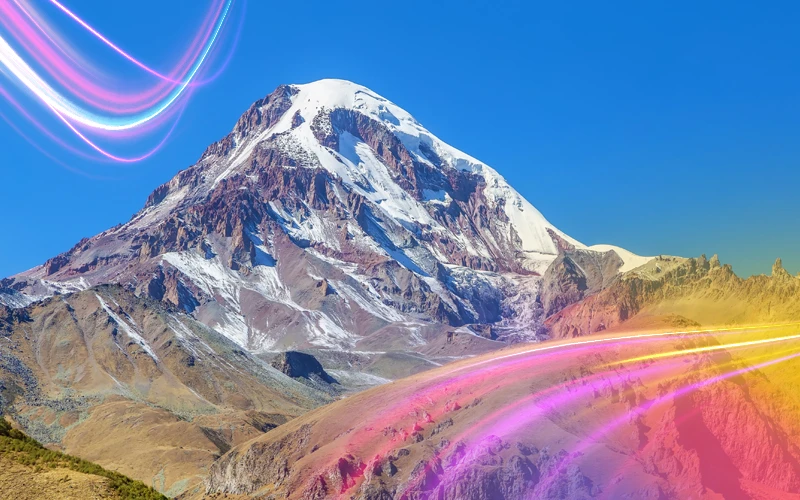
Kazbegi, officially known as Stepantsminda, is around three hours north of Tbilisi along the Georgian Military Highway. Its best-known view is Gergeti Trinity Church against the backdrop of Mount Kazbek. Many journeys also include a stop at Ananuri Fortress.
A detailed comparison of the two destinations, including suggested itineraries, is available in [Batumi and Kazbegi: From Georgia’s Beaches to Its Mountains].
Georgian Cuisine at a Glance
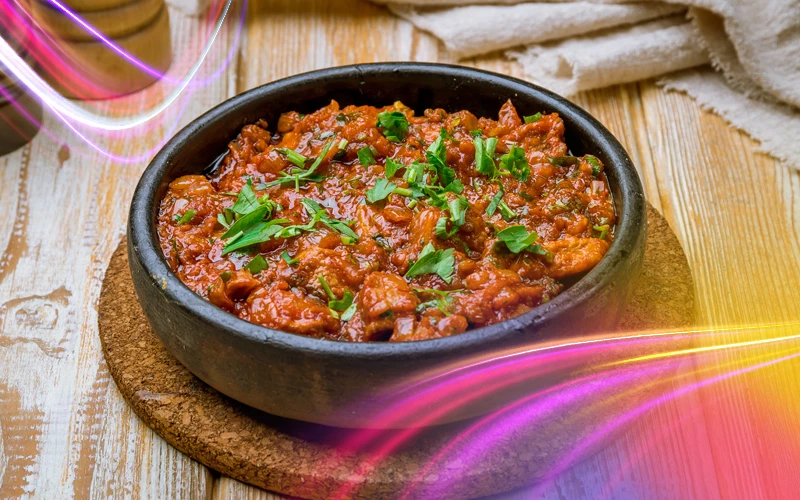

Food in Georgia is part of the travel experience rather than simply a meal.
Khinkali are filled dumplings that usually cost around GEL 1 to GEL 1.5 each. Khachapuri is a cheese-filled bread with variations in almost every region. Other popular dishes include mtsvadi and lobio.
Explore the complete list in [Georgian Food: Top Dishes and Best Restaurants Guide].
Other Georgia Tourism Places Worth Your Time
Mtskheta: The Ancient Capital Half an Hour Away
Mtskheta lies around 20 kilometers north of Tbilisi and served as the capital of the Kingdom of Kartli for approximately eight centuries.
Its historic monuments are listed as a UNESCO World Heritage Site. The most important attractions include Svetitskhoveli Cathedral, completed in 1010; the sixth-century Jvari Monastery, overlooking the confluence of the Mtkvari and Aragvi rivers; and Samtavro Monastery.
Half a day is generally enough to explore Mtskheta. Minibusses operate from Didube Station, with fares starting at around GEL 1.
Kakheti and Sighnaghi: Vineyards and the Alazani Valley
Kakheti is located in eastern Georgia, around two hours from Tbilisi. It is associated with one of the world’s oldest winemaking traditions, particularly the use of buried clay vessels known as qvevri.
Sighnaghi is a hilltop town surrounded by eighteenth-century walls, with views across the Alazani Valley and the Caucasus Mountains. Bodbe Monastery is located nearby, while Telavi offers a quieter base for travelers who prefer to stay overnight.
One of the best periods to visit is during Rtveli, Georgia’s grape harvest season. In eastern Georgia, the 2026 season is expected to begin in early September and continue until around mid-October.
Kutaisi: Gateway to Western Georgia and UNESCO Monasteries
Kutaisi, Georgia’s second-largest city, is located around 230 kilometers west of Tbilisi. It lies on the railway route connecting the capital with Batumi and has its own international airport.
Its leading landmark is Gelati Monastery, a UNESCO World Heritage Site founded by King David the Builder in 1106. Bagrati Cathedral, overlooking the city, is another major attraction.
Kutaisi is often used as a base for exploring the canyons and caves of Imereti. The nearby town of Tskaltubo is also known for its thermal waters.
Martvili Canyon, Okatse Canyon, and Prometheus Cave
These are among the most popular natural attractions northwest of Kutaisi, although visiting all three comfortably in one day can be difficult.
- Martvili Canyon: Located around 45 to 50 kilometers from Kutaisi. It has a circular walking trail of approximately 700 meters and a short boat trip along the emerald waters of the Abasha River. Admission costs around GEL 28.
- Okatse Canyon: Features an elevated walkway extending for approximately 900 meters above the canyon. It may close during rainy weather.
- Prometheus Cave: Located near Tskaltubo, approximately 20 kilometers from Kutaisi. The underground walking route is around 1.4 kilometers long, and admission costs approximately GEL 30.
Uplistsikhe and Gori: An Ancient Rock-Cut City
Uplistsikhe is around an hour and a half west of Tbilisi and is often combined with Mtskheta in a full-day excursion.
The city was carved into sandstone, with its earliest layers dating back to the pre-Christian era. It remained inhabited until the thirteenth century and contains grape-pressing rooms, halls, temples, and a church.
Uplistsikhe is only 12 kilometers from Gori and its historic fortress. Because the archaeological site is exposed, avoid visiting around midday during summer.
Vardzia and Rabati Castle: Georgia’s Far South
This is a long journey, but it is worthwhile for travelers interested in archaeological sites.
Vardzia is a twelfth-century cave complex commissioned by Queen Tamar. It originally extended across thirteen levels connected by internal tunnels, with a church at its center. A major earthquake in 1283 destroyed much of the complex.
The route also passes the restored Rabati Castle in Akhaltsikhe. Vardzia is approximately 240 kilometers from Tbilisi, so staying overnight in Borjomi or Akhaltsikhe is usually more practical.
Borjomi and Bakuriani: Mineral Water and Forests
Borjomi is Georgia’s famous mineral-water town. It is surrounded by the forests and organized hiking trails of Borjomi-Kharagauli National Park. Two trains operate daily from Tbilisi.
Nearby Bakuriani is a quieter ski destination that suits families and beginners. The two towns are connected by an old narrow-gauge railway known as the Kukushka, and the train journey is an attraction in itself.
Svaneti: Mestia, Ushguli, and Medieval Stone Towers
Svaneti is one of Georgia’s most remote and distinctive mountain regions, located in the country’s northwest.
Mestia stands at an altitude of around 1,500 meters and is known for its medieval stone towers. It is approximately a three-hour uphill drive from Zugdidi.
Ushguli is considered one of Europe’s highest permanently inhabited settlements. Snow commonly covers the region from October to April, while the most suitable period for road travel is between July and early October.
Allow at least three days to explore Svaneti properly.
Gudauri: Skiing Two Hours from Tbilisi
Gudauri is located along the Georgian Military Highway at elevations ranging from around 2,200 to 3,279 meters. Its ski runs cover approximately 37 kilometers.
The ski season usually runs from December to April, with the most reliable snowfall generally between January and March. In summer, Gudauri becomes a destination for hiking and paragliding.
Best Time to Visit Georgia

- April to June: Green landscapes and generally lower prices.
- July to September: Mountain activities, hiking, and Batumi’s beaches.
- September and October: Grape harvest season and autumn colors.
- December to April: Skiing in Gudauri and Bakuriani.
To avoid negotiating with taxi drivers after a long flight, you can arrange airport transportation through almatar and travel directly to your hotel.
Getting Around Georgia

Train Between Tbilisi and Batumi
The train is one of the most comfortable ways to travel between the two cities. Around two services operate in each direction daily, and the journey takes approximately five hours.
Second-class tickets start at around GEL 35. Some services also stop near Kutaisi International Airport.
Marshrutka Minibuses
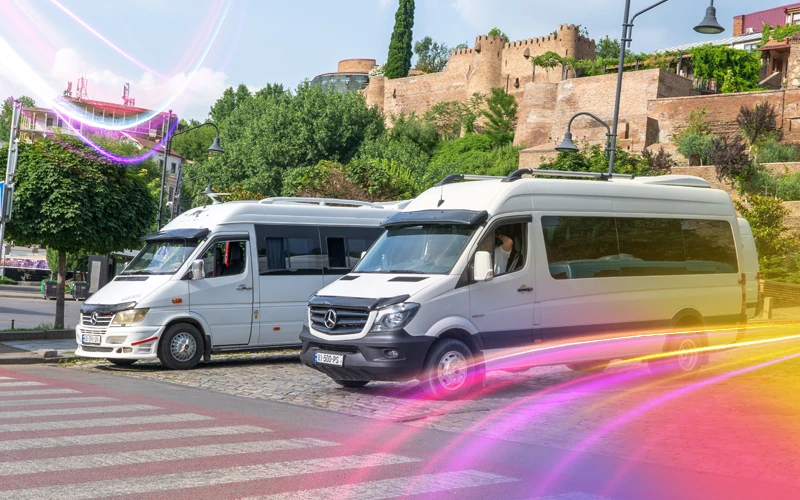
Marshrutkas are usually the cheapest option for intercity travel, although they can be less comfortable on long journeys.
Taxi Apps
Bolt is one of the most widely used ride-hailing apps in Georgia. A journey from Tbilisi International Airport to the city center generally costs around GEL 25 to GEL 38.
Private Driver with a Car
Hiring a driver for a full day is a practical option for visiting Kazbegi, Kakheti, Svaneti, or Vardzia, as these destinations are not served by direct trains.
How Much Does a Trip to Georgia Cost in 2026?
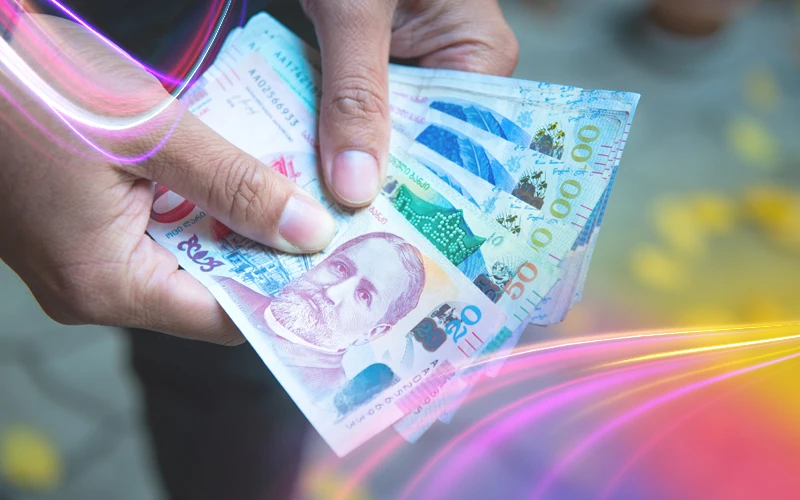

Georgia’s currency is the Georgian lari. One US dollar is approximately equal to GEL 2.7.
- Good three-star hotel: Prices start at approximately $31 per night and may increase during the summer.
- Meal at a local restaurant: around GEL 15-40 per person.
- Moderate daily budget: Approximately $50 to $85 per person.
- Admission to natural attractions: Usually between GEL 25 and GEL 30 per site.
- Public transportation in Tbilisi: Less than GEL 1 per journey.
Rather than paying for flights and hotels all at once, travelers may be able to use almatar’s installment booking option through Tabby.
Practical Tips for Gulf Travelers

Halal Food
Halal food is easiest to find in Batumi and the wider Adjara region. Turkish, Syrian, and other Arab restaurants are also available in Tbilisi’s Old Town.
Mosques
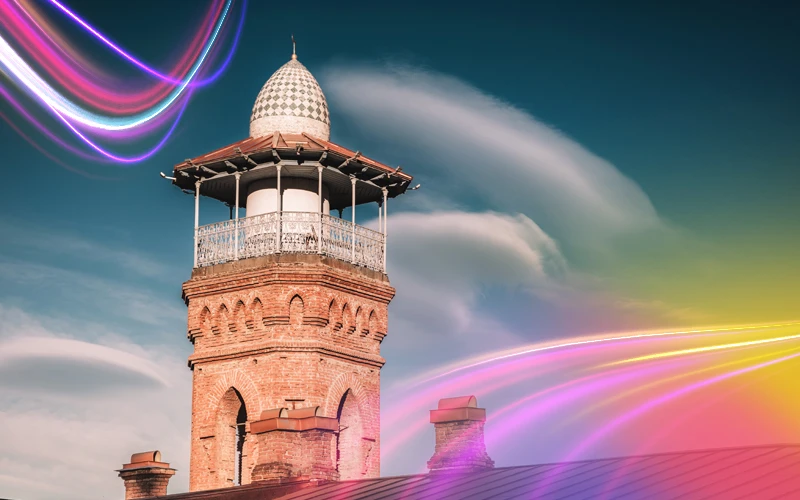
Travelers can visit the Tbilisi Central Mosque near Narikala Fortress and the Orta Jame Mosque in Batumi.
Cash and Internet Access
Cards are widely accepted in Georgian cities, but carrying some Georgian lari is useful when visiting villages and natural attractions.
Local SIM cards are available at the airport, with basic options starting at around GEL 5 for maps and everyday internet use.
Clothing at Religious Sites
Visitors should wear modest clothing and cover their heads when entering monasteries. Some sites provide suitable coverings free of charge.
Conclusion
Tourism in Georgia rewards thoughtful planning more than simply adding extra days to your itinerary. Start by confirming your travel dates, then organize accommodation and transportation around them.
Compare available flights and hotels through the almatar app or website and book your journey during the season that suits you.
FAQs About Tourism in Georgia
Do I need a visa to enter Georgia?
Citizens of GCC countries can enter Georgia without a visa. Different rules apply to residents of other nationalities, so checking the official Georgian consular website before booking is recommended.
What are the main requirements for traveling to Georgia?
Visitors must carry valid health and travel accident insurance covering the full duration of their stay.
How many days are enough for visiting Georgia?
Seven days are enough to combine Tbilisi with a mountain trip and a destination in western Georgia. Ten days allow you to add Svaneti or Vardzia.
What is the best time for tourism in Georgia?
May and September offer mild weather, July and August are suitable for Batumi’s beaches, and the period from January to March is popular with skiers.
Is Georgia suitable for Gulf families?
Yes. Batumi, Borjomi, and Bakuriani offer comfortable family-friendly experiences, and eligible accommodation bookings may be paid in installments through almatar.
Additional Articles to Read:
You might also like
-

Philippines
Filipino Food: A Traveler’s Guide to Local Cuisine
-
Explore Countries
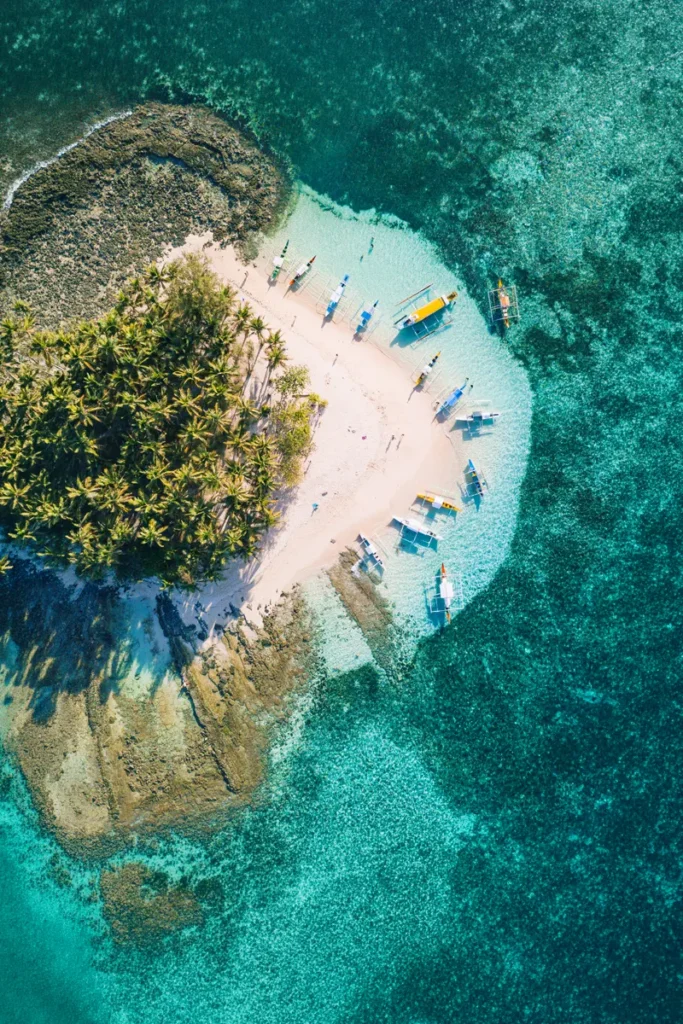
Siargao Island: Beaches, Activities & Hotels
-
Philippines
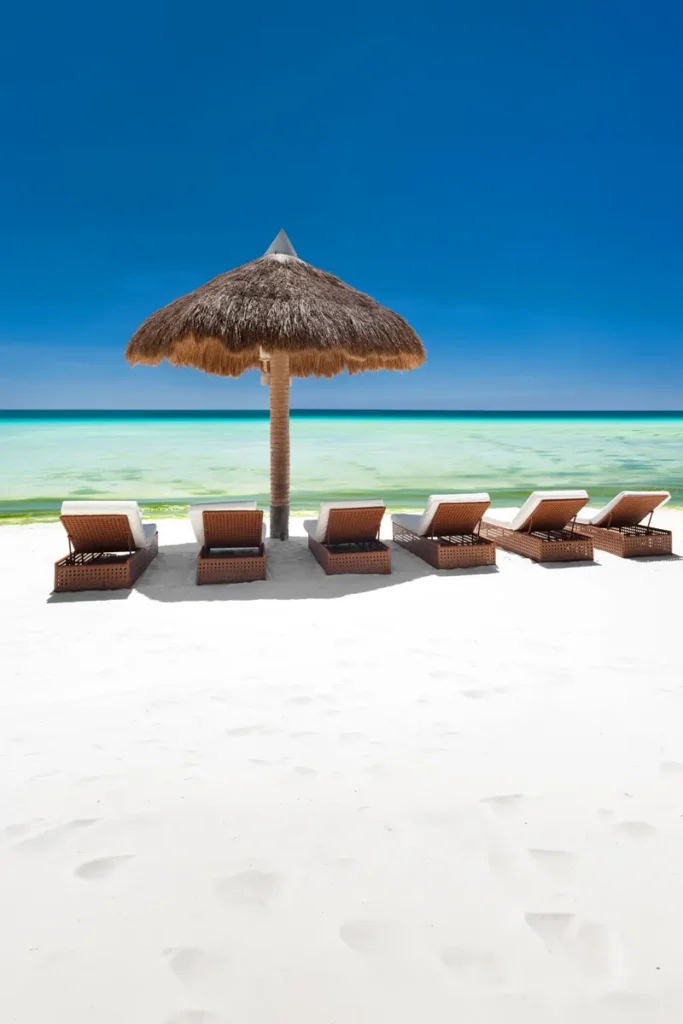
Philippine Islands: Boracay, Palawan & Cebu
-
Manila
Manila Travel Guide 2026: Visa, Attractions & Hotels
-
Philippines
Philippines Travel Guide 2026: Visa, Attractions & Tips
-

News
almatar and Cluster2 Airports Company Sign MoU to Develop Travel Solutions and Grow Umrah Passenger Traffic
-

Explore Countries
Singapore Changi Airport Guide
-
Explore Cities
Penang Travel Guide
-
Explore Cities
Langkawi Island Travel Guide