









































AlUla Tourist Attractions: Hegra, Rock Formations & Desert Views
AlUla is a desert oasis in northwestern Saudi Arabia, where thousands-of-years-old archaeological sites sit among sandstone mountains shaped by wind and water over the ages. This striking landscape has made it a destination many travelers dream of visiting. Here, you will find Hegra, also known as Madain Salih, Saudi Arabia’s first UNESCO World Heritage Site, along with an elephant-shaped rock and a mirror-covered building in the heart of a valley.
This guide helps you explore AlUla, from its historic landmarks to its distinctive rock formations. It covers the main AlUla tourist attractions, the best things to do, the best time to visit, how to get there, and where to stay.
Where Is AlUla and Why Visit AlUla?
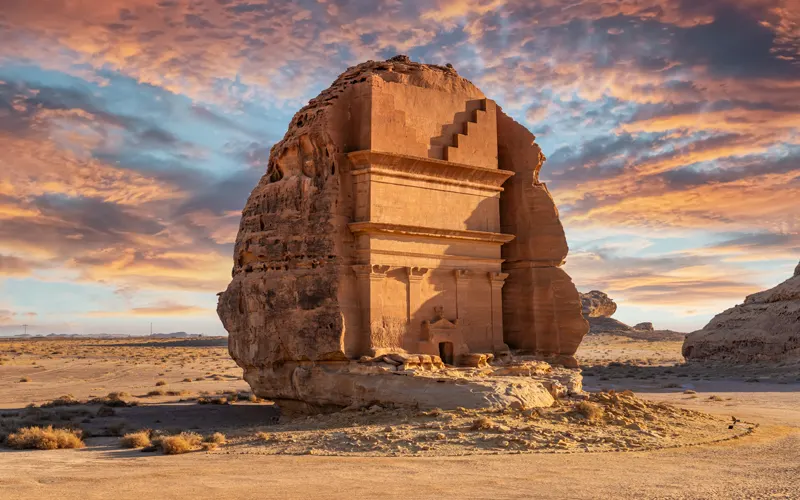
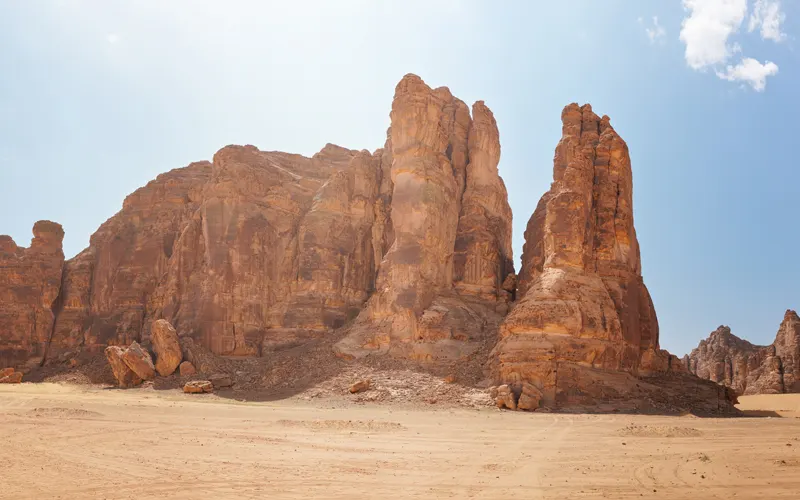
AlUla sits in northwestern Saudi Arabia within the Madinah region, surrounded by sandstone mountains and palm oases. Throughout history, it stood at the crossroads of ancient trade routes linking the Arabian Peninsula with the Levant and Egypt. Successive civilizations rose on its land, including the Nabataeans at Hegra and the kingdoms of Dadan and Lihyan, which makes it feel like an open-air museum. Hegra lies about 20 kilometers north of AlUla town.
What Is AlUla Famous For?
- Hegra, also known as Madain Salih: the first Saudi site on the UNESCO World Heritage List, inscribed in 2008.
- Rock formations: from Elephant Rock to the Gharameel rocks and the sandstone slopes of Ashar Valley.
- Maraya: the world’s largest mirrored building, according to Guinness World Records.
- The Old Town and Dadan: mud-brick houses, lion tombs, and ancient inscriptions at Jabal Ikmah.
AlUla Tourist Attractions: The Best Places to Visit in AlUla
Hegra (Madain Salih)
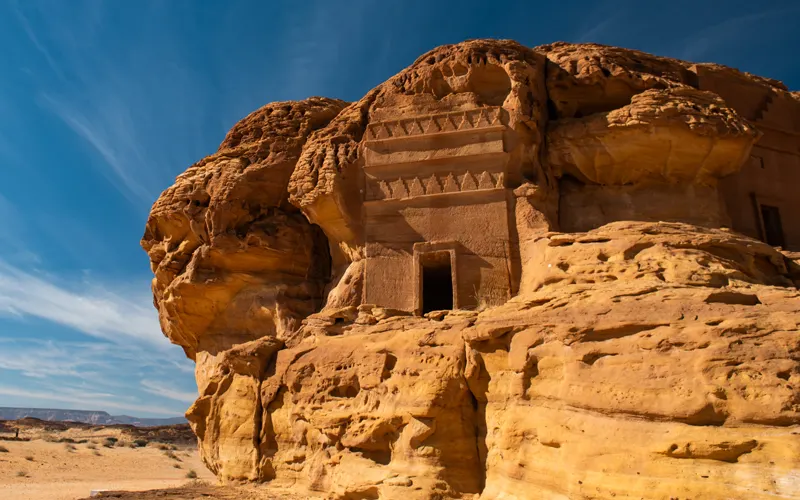
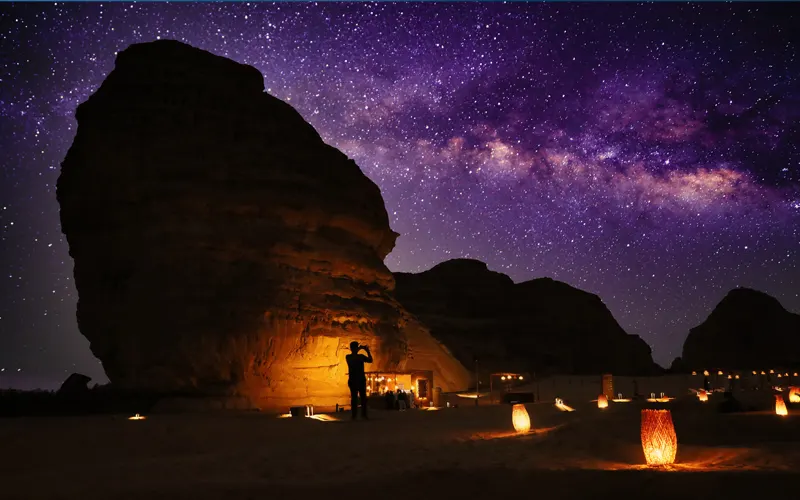
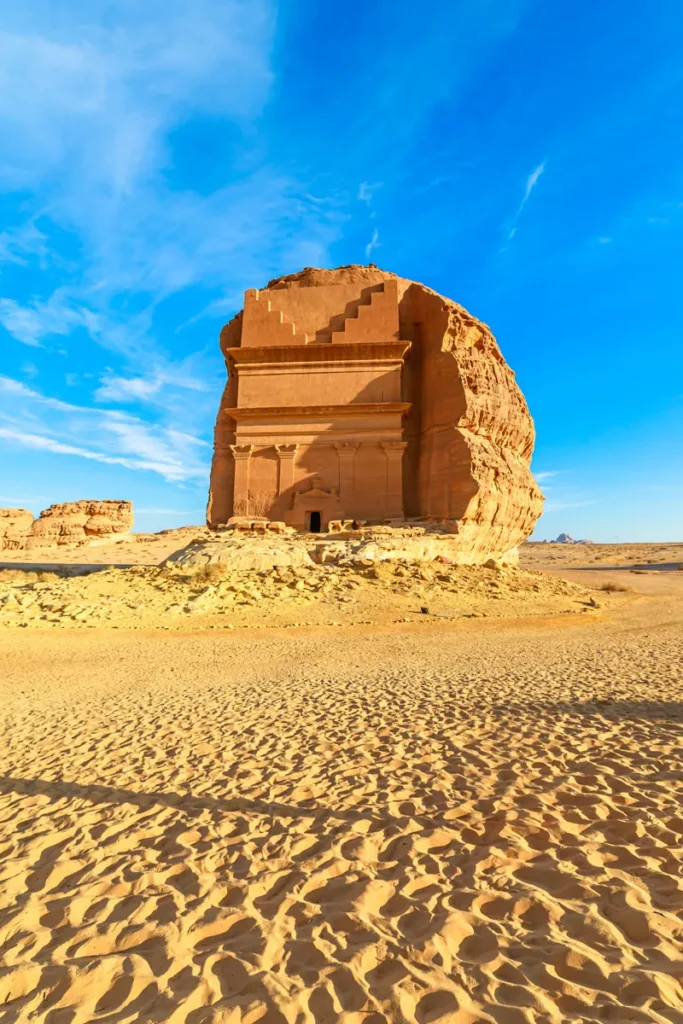
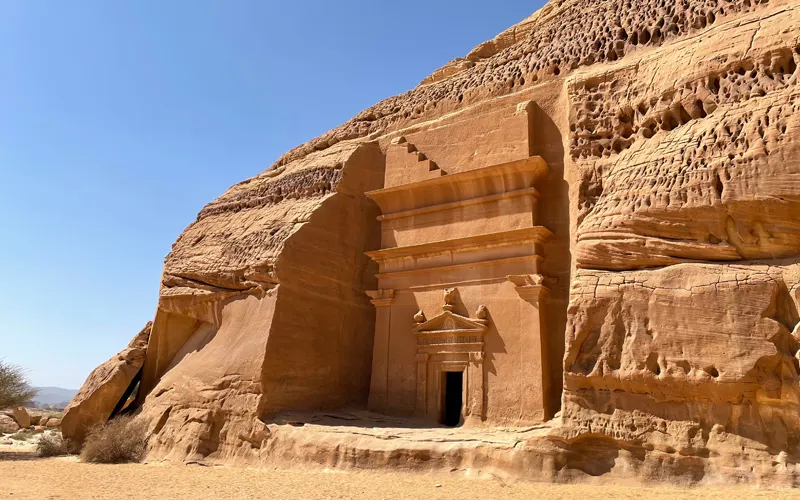
UNESCO inscribed the Hegra site in 2008, making it the first Saudi site on the World Heritage List. Hegra was the principal southern city of the Nabataean kingdom and its second city after Petra; it holds 111 monumental tombs, 94 with decorated facades, along with water wells that show how skilled the Nabataeans were at managing water. Among its best-known landmarks are Qasr al-Farid, a tomb carved into a huge, isolated sandstone rock, and Jabal Ithlib, where a large hall known as the Diwan was carved into the stone.
Elephant Rock and the Rock Formations
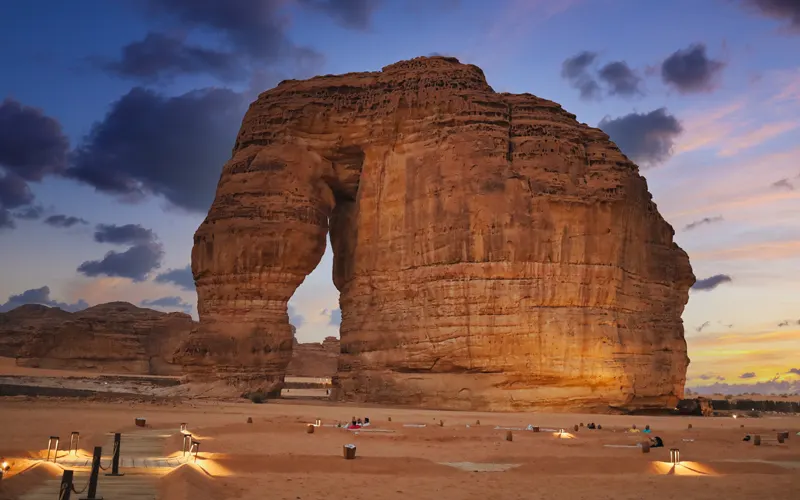
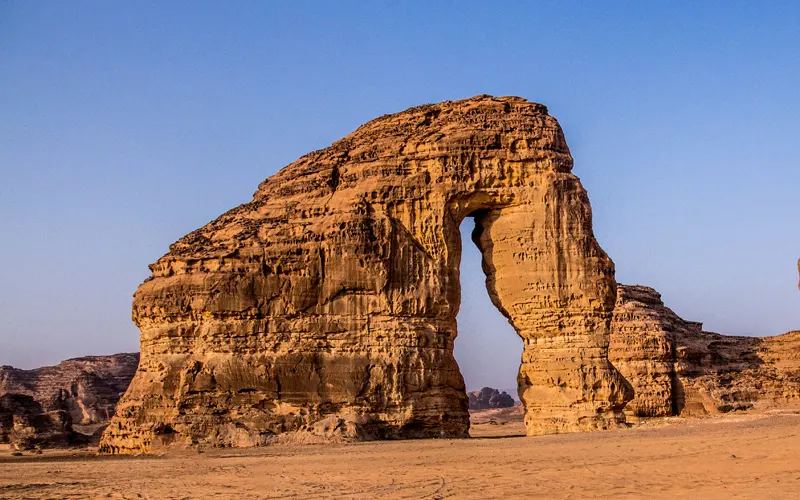
Elephant Rock is one of the most striking rock formations in the AlUla valley, shaped by wind and water erosion into a towering elephant about 50 meters high, and many visitors make a point of seeing it at sunset. Other formations, such as the Gharameel rocks, are scattered across the surrounding desert, creating a landscape that invites photography and quiet contemplation.
Dadan and Jabal Ikmah
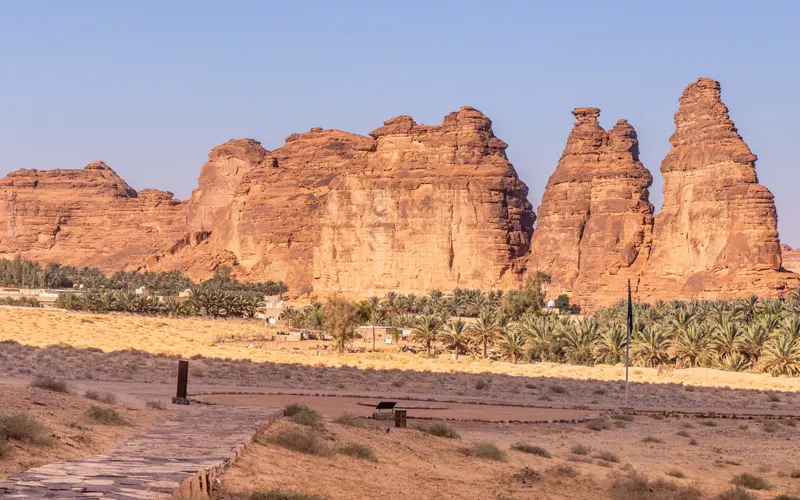
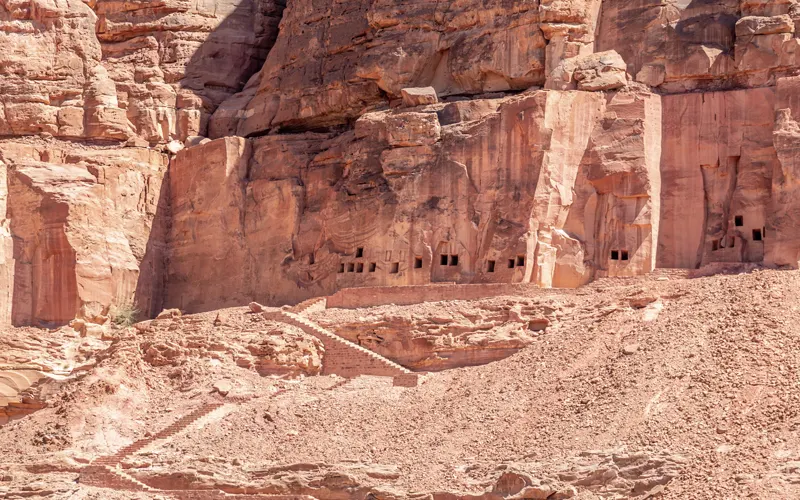
Dadan, the capital of the kingdoms of Dadan and Lihyan, is one of AlUla’s most important archaeological sites and is home to the Lion Tombs carved into the rock. Nearby, Jabal Ikmah is known as an open-air library, with hundreds of ancient inscriptions etched into its rocks. Guided tours combine visits to both sites.
AlUla Old Town
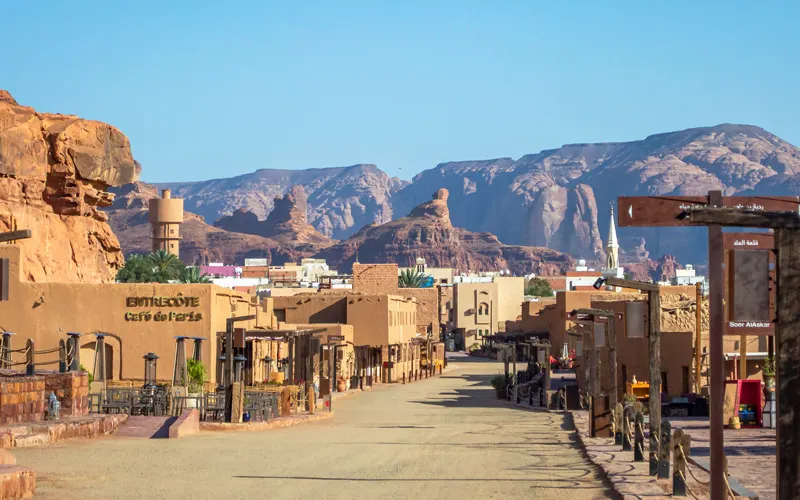
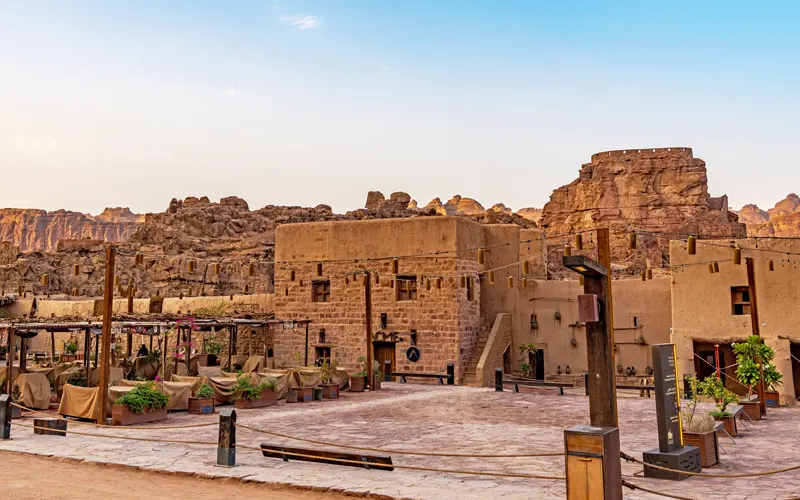
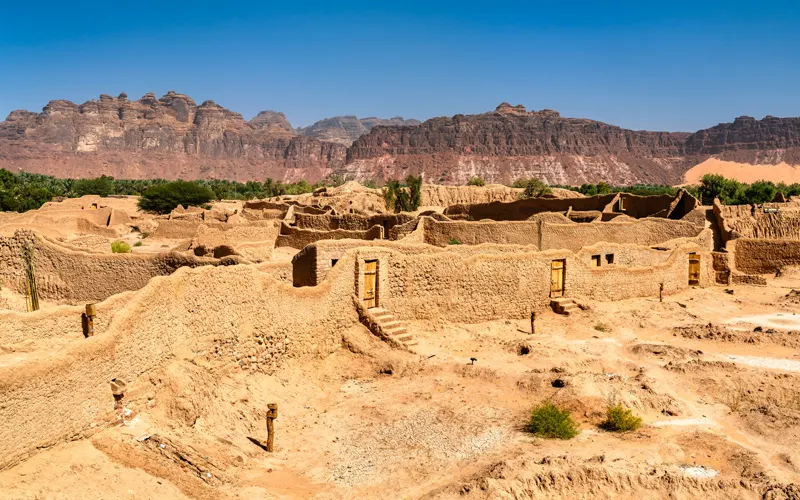
The Old Town’s narrow alleys and mud-brick houses take you back to a time when its markets bustled with traders and pilgrims. Today, its restaurants serve local dishes, making it a good place to sample AlUla’s cuisine after a day exploring the archaeological sites.
Maraya
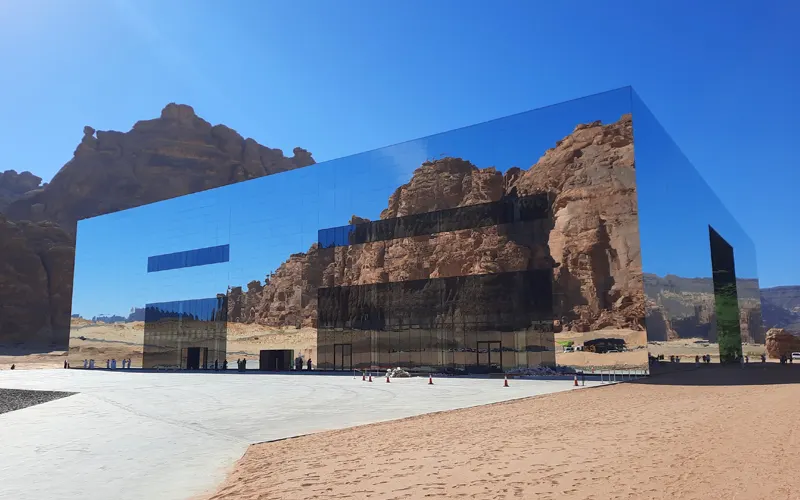
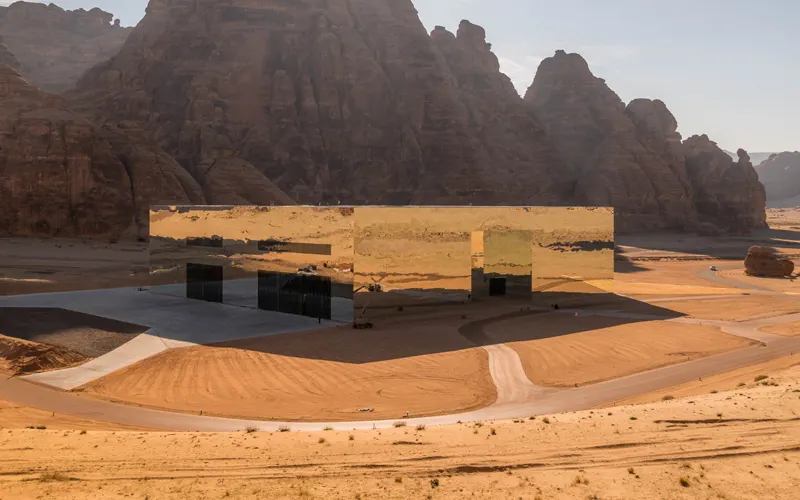
Maraya Hall in Ashar Valley is clad in 9,740 square meters of mirrors and holds the Guinness World Records title for the world’s largest mirrored building. Its walls reflect the surrounding sandstone cliffs, making the building appear to blend into the landscape.
Things to Do in AlUla
- Take a tour of Hegra: visit Madain Salih on an organized tour that introduces you to the Nabataean tombs and their stories.
- Watch the sunset at Elephant Rock: one of AlUla’s best views, especially for photographers.
- Visit Dadan and Jabal Ikmah: discover the Lion Tombs and admire hundreds of ancient inscriptions on a single tour.
- Wander through the Old Town: narrow alleys, mud-brick houses, and local restaurants.
- Visit Maraya: take photos in front of the world’s largest mirrored building.
Best Time to Visit AlUla
- Winter, December to February: pleasant weather for outdoor activities and the most in-demand season, so book early.
- Autumn and spring, October to November and March to April: usually mild weather and relatively smaller crowds.
- Summer: hot desert weather, with typically lower hotel prices, so it suits visitors who can handle the heat.
Getting to AlUla: Planning Your Trip
AlUla International Airport serves the city, and hotels in Ashar Valley are roughly 50 minutes away by car, depending on the property and route. You can compare fares using almatar’s flight search feature.
Where to Stay in AlUla
You can browse almatar’s AlUla hotels page to compare prices and book your stay directly. Here are a few options based on their locations:
- Banyan Tree AlUla: a five-star resort in Ashar Valley, about a three-minute drive from Maraya and 22 minutes from Hegra.
- Caravan by Habitas AlUla: a luxury glamping experience in Ashar Valley, about a six-minute drive from Maraya and 17 minutes from Hegra.
- Cloud7 Residence AlUla: a four-star property offering serviced bungalows in the Al Aziziyah district, with a pool, a restaurant, and an airport shuttle.
Tips Before Your Trip
- Book early: winter is the season of highest hotel demand.
- Book your tours in advance: Hegra and Dadan are usually visited on organized tours, so book before you arrive.
- Pack the right clothes: desert weather is cold in winter and hot in summer, so bring warm layers for the evenings and sun protection.
- Allow enough time: set aside at least three days, with one for Hegra, one for Dadan, Jabal Ikmah, and the Old Town, and one for Elephant Rock and Maraya.
Book Your Trip Now
Now that you know what AlUla tourist attractions have to offer, use almatar’s flight search feature to compare fares.
You can also book your stay directly through almatar’s AlUla hotels page.
Frequently Asked Questions
What is AlUla famous for?
AlUla is famous for Hegra, the first Saudi site on the UNESCO list; rock formations such as Elephant Rock; Maraya, the world’s largest mirrored building; and its Old Town and the ruins of Dadan.
What are the main attractions in AlUla?
The main attractions in AlUla are Hegra, Elephant Rock, Dadan and Jabal Ikmah, the Old Town, and Maraya.
When was Hegra added to the UNESCO list?
Hegra was added in 2008 as the first Saudi site on the list, and it includes 111 monumental tombs, 94 of which have decorated facades.
How high is Elephant Rock?
Elephant Rock is about 50 meters high and is one of the most striking rock formations in the AlUla valley.
What can I do in AlUla?
Popular things to do in AlUla include touring Hegra, watching the sunset at Elephant Rock, visiting Dadan and Jabal Ikmah, strolling through the Old Town, and visiting Maraya.
What is the best time to visit AlUla?
Winter, from December to February, is ideal for outdoor activities. Autumn and spring, particularly October to November and March to April, suit visitors who prefer smaller crowds. Summer is hotter, and hotel rates are often lower.
How do I plan a trip to AlUla?
Set aside one day for Hegra, one for Dadan, Jabal Ikmah, and the Old Town, and one for Elephant Rock and Maraya. Book your tours and hotel early, and compare flights on almatar.
You might also like
-
Explore Cities
Tabuk Tourist Attractions: Mountains, Beaches & Historic Sites
-
Abha
Abha Tourist Attractions: Asir Mountains & Heritage Villages
-
Explore Cities
Taif Tourist Attractions: Roses, Mountains & Cool Weather
-
Al Madinah
Madinah Tourist Attractions: From the Prophet’s Mosque to Uhud
-
Explore Cities
Makkah Tourist Attractions: What to Visit Beyond the Haram
-
Explore Cities
Jeddah Tourist Attractions: Heritage, Waterfront and New Museums
-
Explore Cities
Tourist Attractions in Riyadh: Famous Landmarks & Top Spots
-
Abha
A Tour of the 2034 World Cup Stadiums in Saudi Arabia
-

Explore Countries
The 2034 FIFA World Cup in Saudi Arabia: Everything We Know So Far