










Seoul Travel Guide: Attractions, Transport & Halal Food
You arrive in Seoul with only a short vacation, then lose your first day trying to understand the subway lines and decide which neighborhood to explore first. The city moves fast and runs efficiently, and the difference between a stressful trip and a smooth one often comes down to what you arrange before departure, not after arrival.
Below, you will find what you need to know about entry procedures, getting from the airport, transportation, major attractions, halal food, and the best time to visit.
Entry Requirements Before Booking Your Flight
- Tourist stay: Saudi and Gulf passport holders can enter South Korea without a prior visa for tourism stays of up to 90 days.
- K-ETA authorization: The temporary exemption from applying for K-ETA has been extended until December 31, 2026, for a number of countries. Several sources indicate that Gulf countries are included, but the official K-ETA website remains the only reliable source before booking.
- Electronic Arrival Card: Travelers who are not exempt must submit it within 3 days of arrival via the official e-Arrival Card portal.
- Documents to prepare: A valid passport, a return ticket, and the address of your first accommodation are recommended.
- Entry requirements can change, so it is best to review the travel requirements published by the Korea Tourism Organization about a week before departure.
From Incheon Airport to Central Seoul
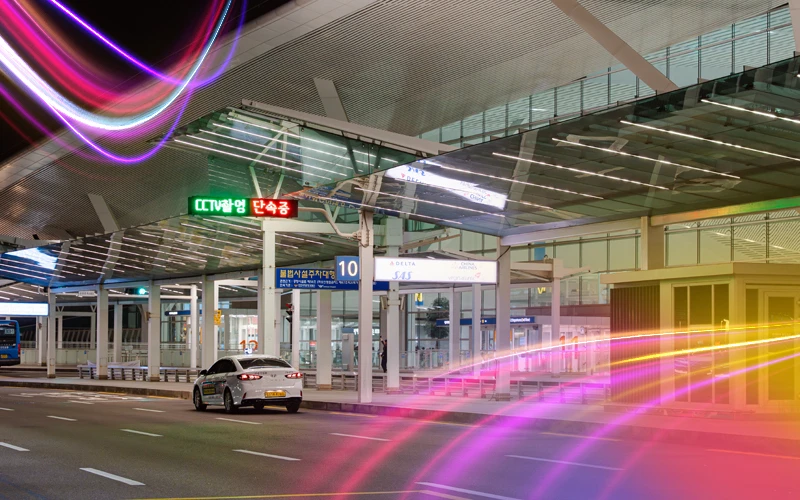
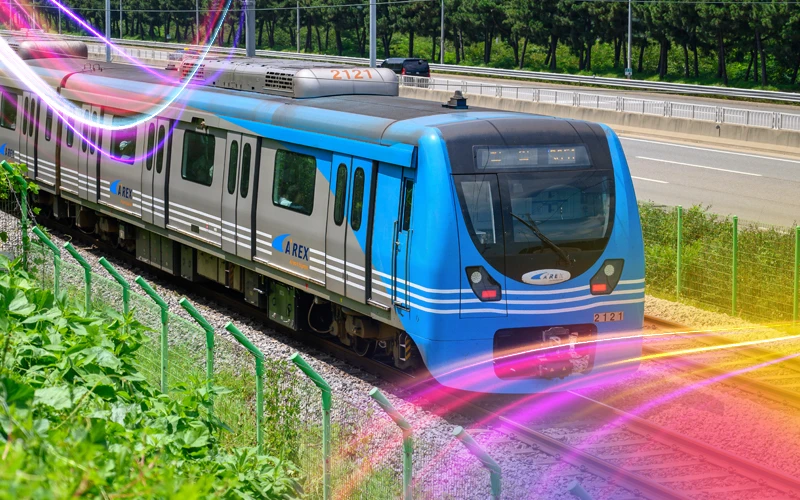
There are several ways to travel from the airport to the city:
- AREX Express Train: Reaches central Seoul Station in about 43 minutes. Tickets cost around KRW 11,000 to 13,000, depending on how you purchase them, with reserved seating and luggage space.
- AREX All-Stop Train: Much cheaper, at around KRW 4,150-5,350. The journey takes about an hour and includes stops at Hongdae and Gimpo Airport.
- Airport limousine buses: A practical option if your accommodation is far from a train station. Tickets cost around KRW 17,000 to 18,000 to areas such as Hongdae and Gangnam.
- Taxis: The most expensive option, often costing more than KRW 70,000 to central Seoul. They may be convenient for groups or late-night arrivals.
- Before leaving the airport: Prayer rooms are available around the clock in both terminals, and you can buy a transportation card from airport convenience stores.
Getting Around Seoul: One Card Is Enough
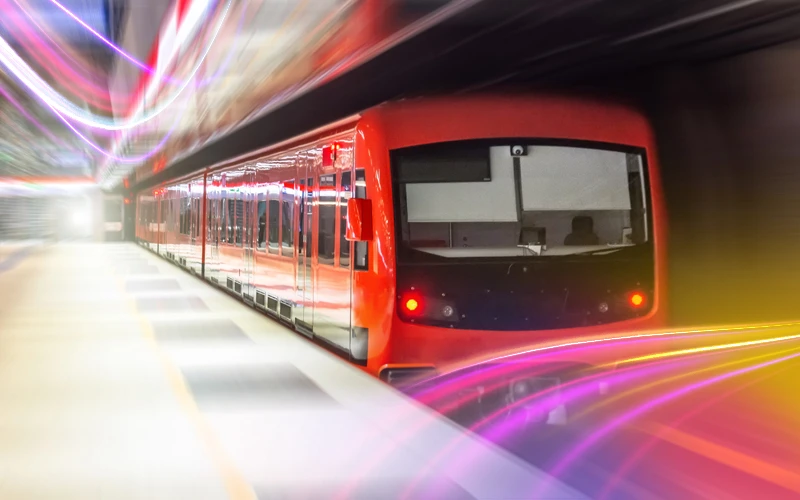

For getting around Seoul, these options make daily transportation easier:
- T-money card: Works on subways, buses, and taxis in most Korean cities. Basic subway fares range from KRW 1,400 to 1,550, depending on the applicable fare system.
- Free transfers: Transfers between the subway and buses within 30 minutes can reduce your daily transportation costs, provided you tap your card when you get off the bus.
- Operating hours: Services generally run from around 5:30 a.m. until shortly after midnight, although the last train varies by line.
- Apps: Naver Map and KakaoMap tend to be more accurate for navigation within Korea, while Kakao T is the most widely used taxi-hailing app.
- Night surcharges: Additional taxi charges apply after 10 p.m. and increase further after midnight.
Arranging your ground transportation in advance can help you avoid higher prices on arrival. For added convenience, almatar offers an airport transfer service to make getting to and from the airport easier.
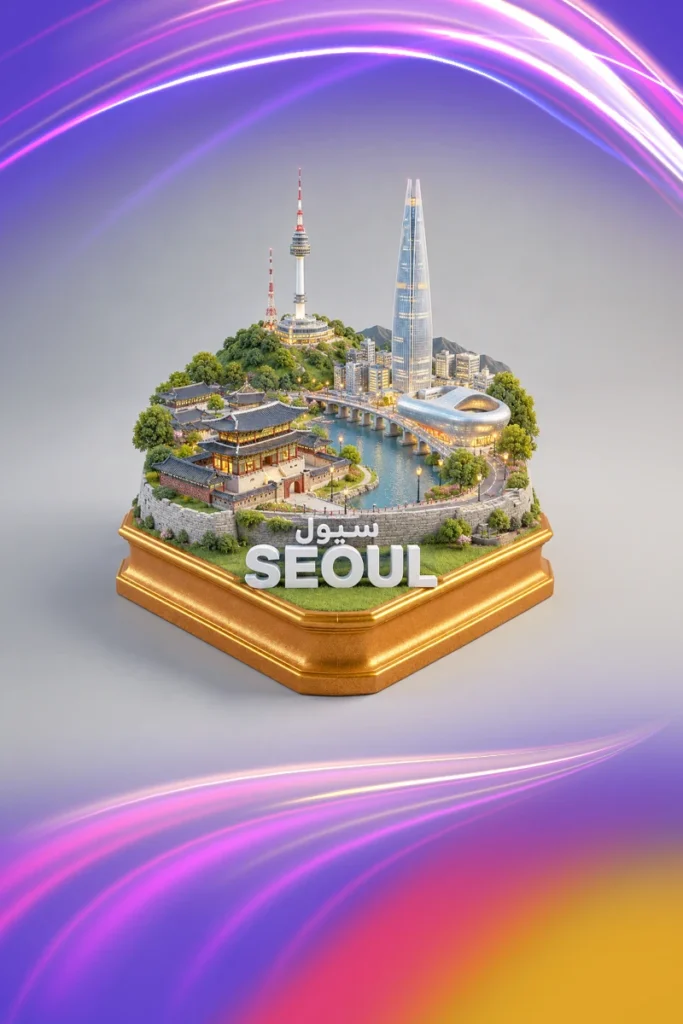
Top Places to Visit in Seoul, South Korea
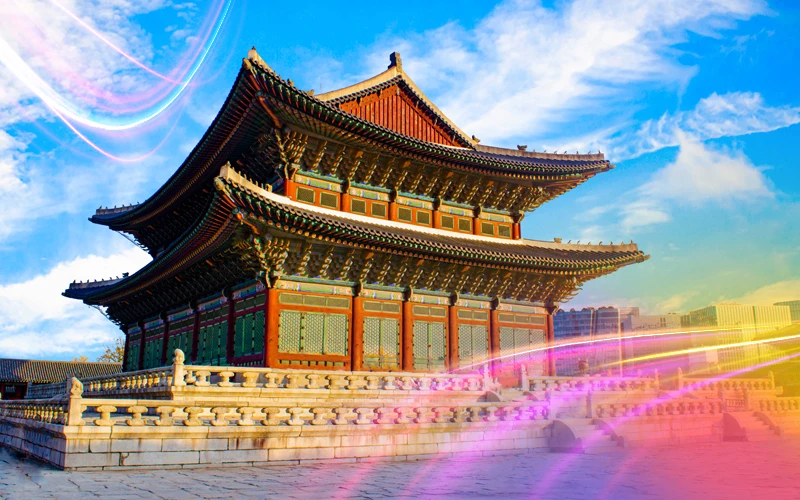
- Gyeongbokgung Palace: One of the capital’s best-known palaces. Adult admission is KRW 3,000, and the palace is closed on Tuesdays. Admission is free for visitors wearing a hanbok. The nearest station is Gyeongbokgung on Line 3.
- Bukchon Hanok Village: Traditional alleyways between the palaces, especially popular for early-morning photography. As it is a residential area, visitors are expected to keep noise to a minimum. The nearest station is Anguk on Line 3.
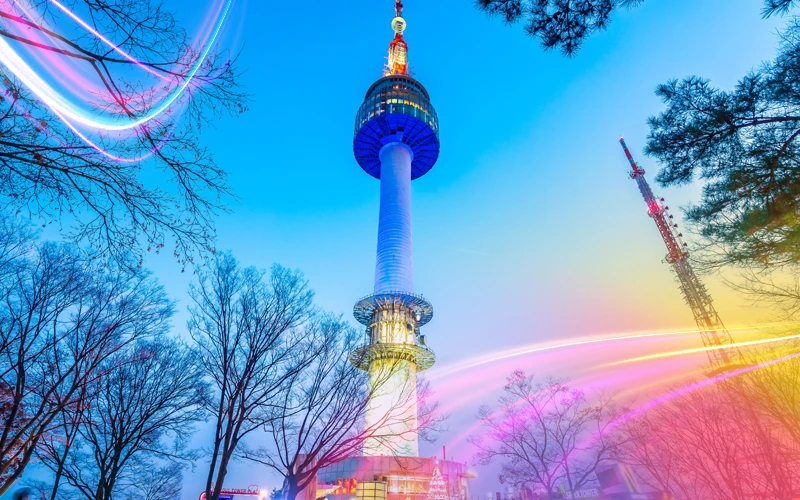
- N Seoul Tower: Offers panoramic views over the city. You can reach it by cable car from near Myeongdong or walk up one of the mountain trails.
- Seoul Sky at Lotte World Tower: The highest observation deck in Korea, featuring a glass floor. Standard admission is around KRW 31,000; details and booking are available on the official Seoul Sky website. The nearest station is Jamsil on Lines 2 and 8.
- Myeongdong: A major destination for shopping, cosmetics, and evening food stalls, with the area becoming livelier later in the day.
- Dongdaemun and DDP: Known for modern architecture and markets that stay open until late.
- Insadong: Home to craft shops and traditional tea houses, making it a good area for local gifts.
- Hongdae: A student district known for street performances, cafes, and a lively evening atmosphere.
- Seongsu-dong: Former industrial buildings have been transformed into cafes and galleries, making it one of the newer neighborhoods attracting visitors.
- Yeouido Hangang Park: Suitable for walking, cycling, and evening river views, and a good option for families.
- Starfield Library at COEX Mall: Features multi-story bookshelves and is a popular free photo spot inside one of the city’s largest underground complexes.
- Gangnam: Modern restaurants, shopping malls, and celebrity-related attractions, with a more spacious urban feel.
Many of these attractions adjust their opening hours between summer, winter, and public holidays. Checking each attraction’s official website the day before your visit is the safest option.
Best Time to Visit Seoul
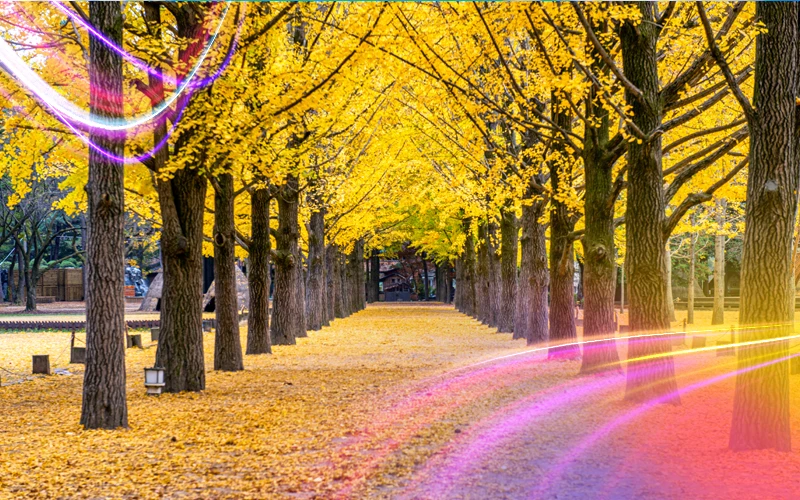
- Autumn, from late September to November: One of the best seasons for walking, with daytime temperatures often ranging between 15°C and 21°C. Autumn colors usually peak in the city around mid-November.
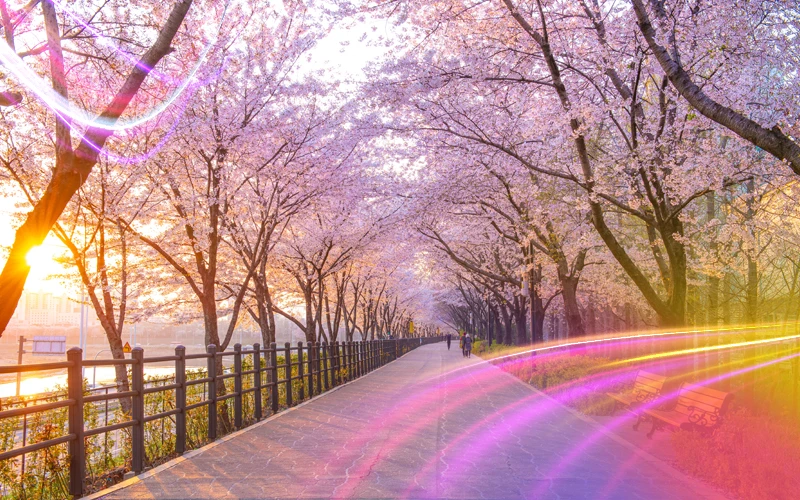
- Spring, from late March to May: Mild weather, with cherry blossoms usually appearing in early April and lasting for about a week, depending on seasonal temperatures.
- Summer, from June to August: Hot and humid with seasonal rain, but generally the least expensive period for flights and hotels.
- Winter, from December to February: Very cold with snowfall. Accommodation prices fall noticeably, while winter lights appear around Myeongdong and Cheonggyecheon Stream.
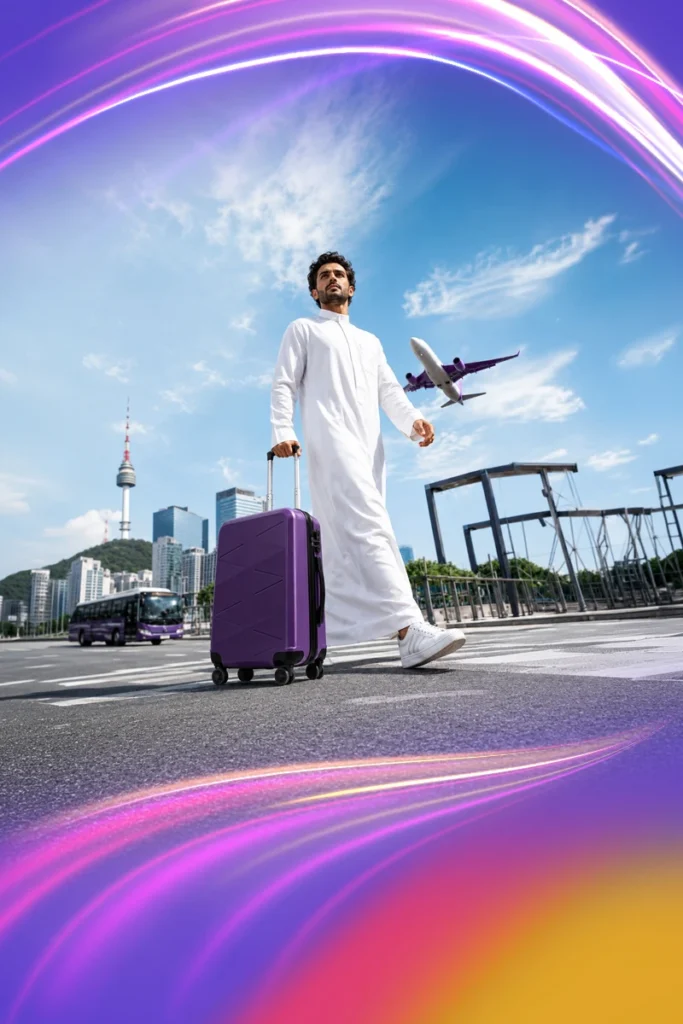
If you’re planning a Riyadh to Seoul trip, spring and autumn offer the most comfortable weather for sightseeing and walking around the city.
Practical tip: Hotel prices rise during peak travel periods, so book early if your trip falls during autumn foliage or cherry blossom season.
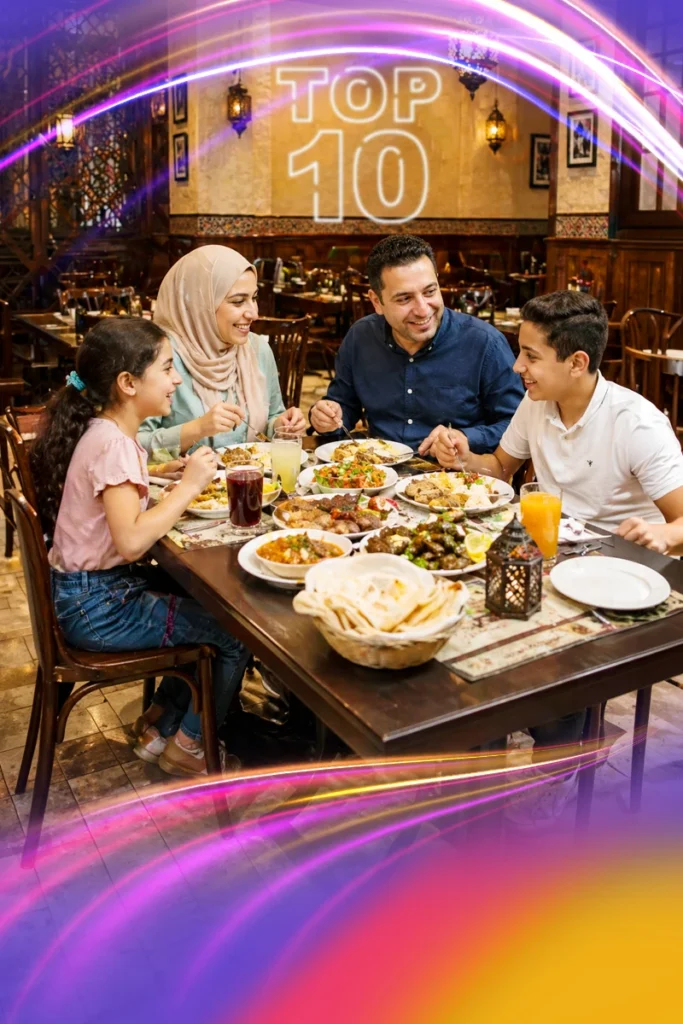
Halal Food and Places to Pray
- Itaewon is the best place to start, with the city’s largest concentration of halal-certified restaurants. The nearest station is Itaewon on Line 6.
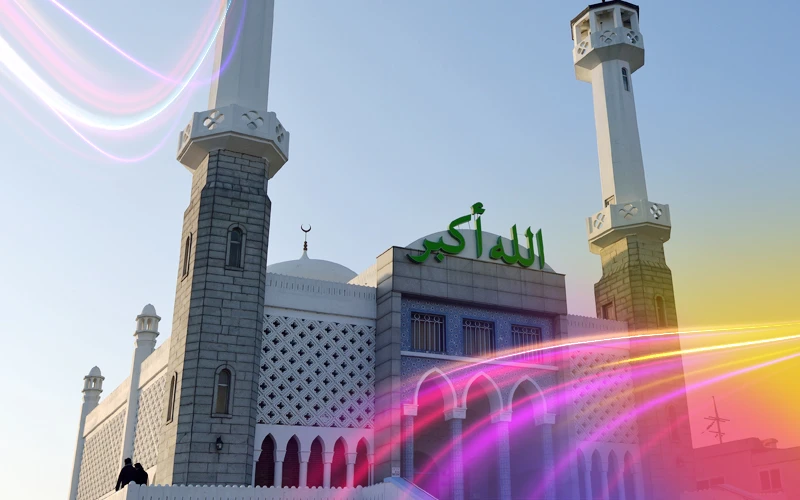
- Seoul Central Mosque in Itaewon is around a 10-minute walk from the station. Friday prayer is held around 1 p.m., and modest dress is recommended.
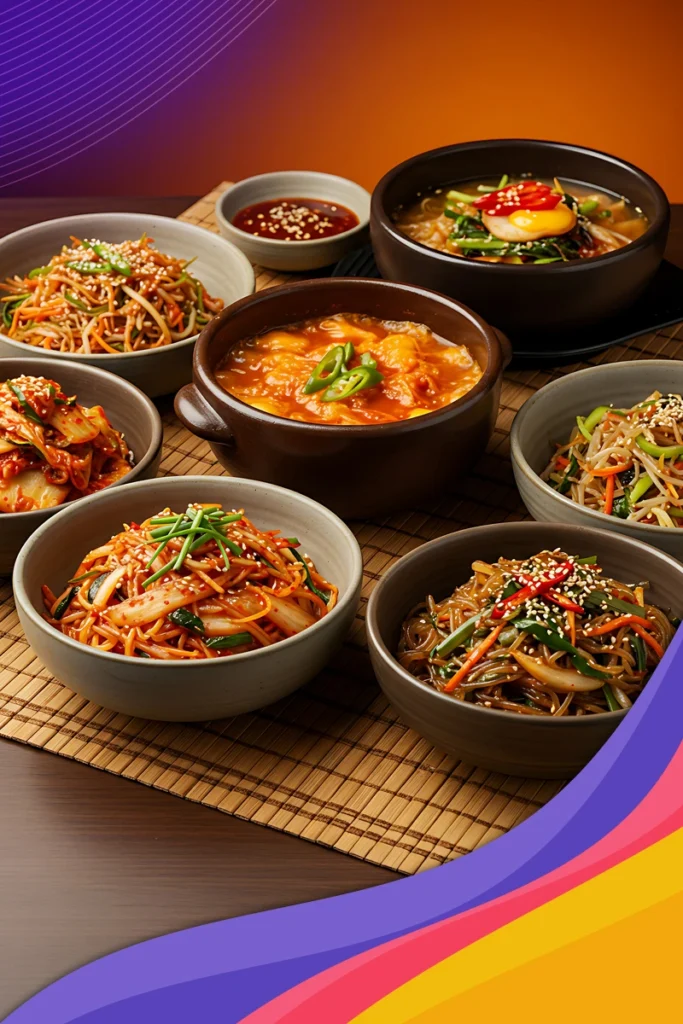
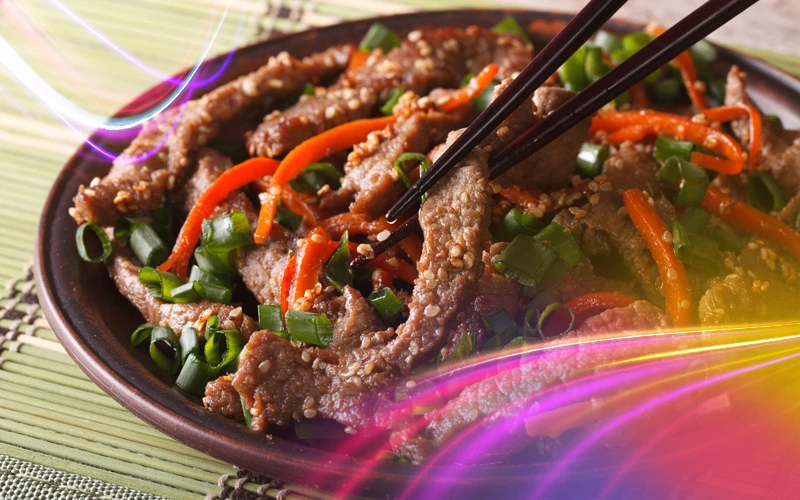
- Certified Korean restaurants such as EID and Makan near the mosque serve halal versions of dishes, including bulgogi, bibimbap, and samgyetang.
- Outside Itaewon: You can also find options in Myeongdong, Dongdaemun, and Gangnam, including Korean barbecue restaurants that use halal meat.
- Check the classification: Restaurants in Korea may be classified as halal-certified, Muslim-friendly, or pork-free. Only the first category indicates a fully halal kitchen that does not serve alcohol.
- Convenience-store meals may contain gelatin or alcohol-based flavorings, so it’s important to check the ingredients.
If you want to explore more local dishes during your trip, [Korean Cuisine: From Kimchi to Traditional Korean BBQ] explains the main dishes in more detail.
Where to Stay in Seoul
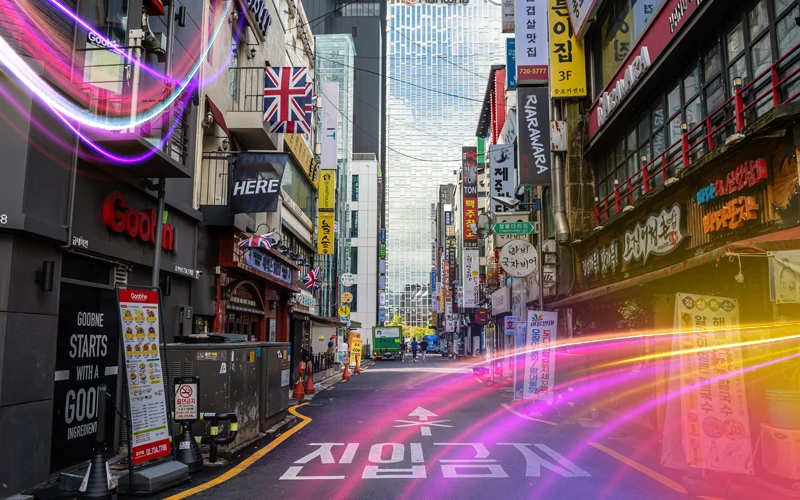
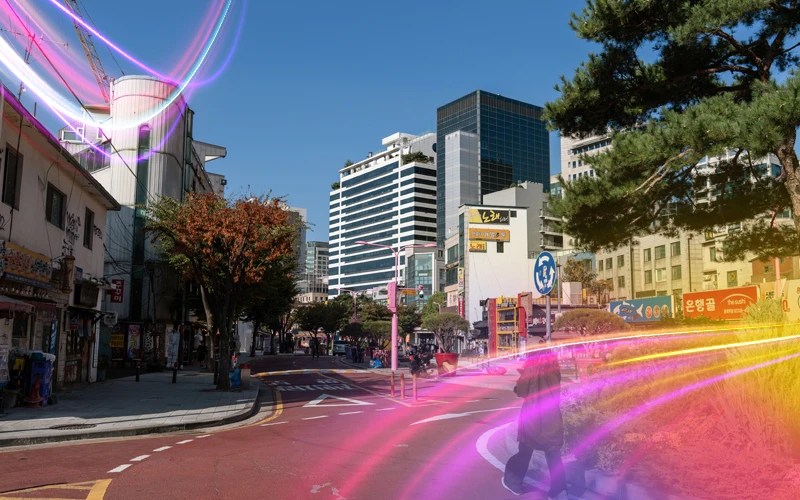
- Myeongdong: Best suited to first-time visitors because of its proximity to restaurants, stations, and major subway lines.
- Itaewon: A convenient choice for travelers who want to stay close to the mosque and halal restaurants.
- Hongdae: Generally offers lower prices, a youthful atmosphere, and plenty of evening activity.
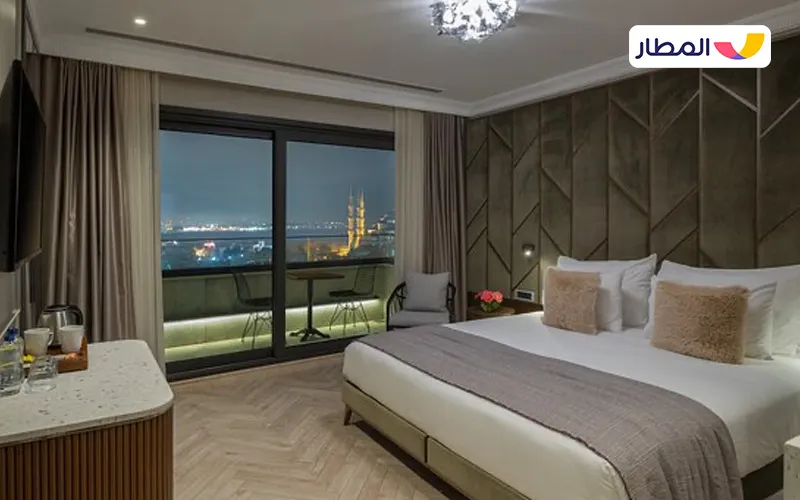
- Gangnam: Offers newer hotels and more spacious accommodation, although it is relatively farther from the city’s historic attractions.
- Seoul Station: A practical option if you plan to use the airport train or take trips to other Korean cities.
Because the cost of a long-haul trip is usually divided between flights and accommodation, you can book hotels through almatar to compare options and use available installment payment services instead of paying the full amount at once.
Quick Tips Before You Fly
- Seoul is six hours ahead of Saudi Arabia.
- The electrical voltage is 220V, with two-pin European-style plugs.
- Tipping is not a local custom and is not generally expected in restaurants or taxis.
- Before your Riyadh to Seoul flight, arrange a SIM card or eSIM in advance, as map apps are essential for getting around the city.
- Keep some cash in Korean won, as you may need it for transportation card top-ups and some traditional markets.
Beyond Seoul: Where to Go Next
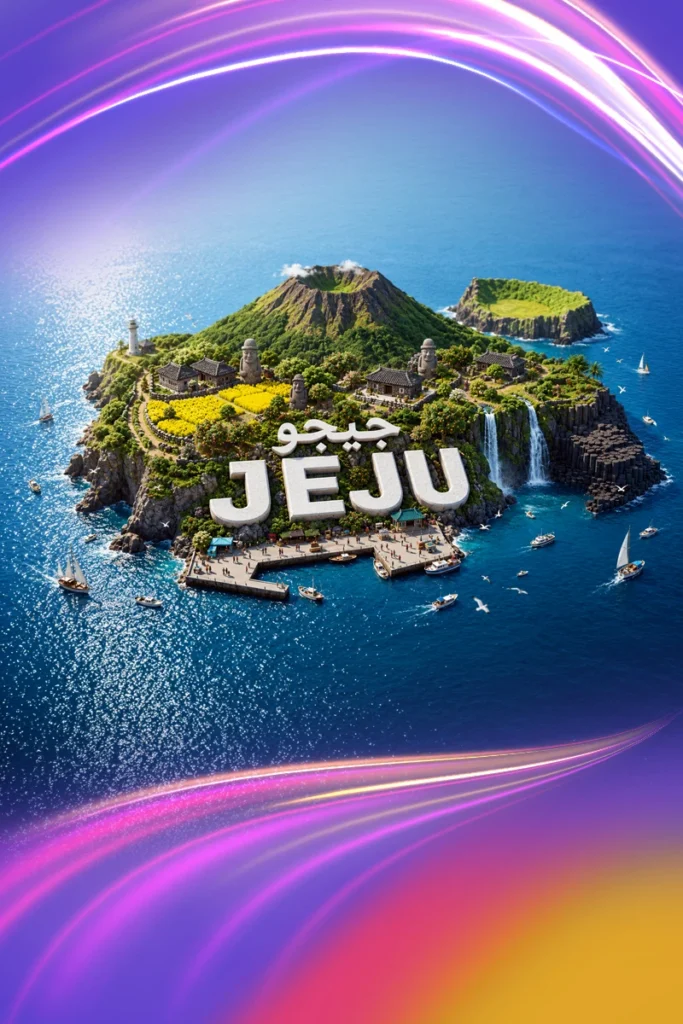
Seoul is a convenient gateway to the rest of the country. From the capital, you can easily fly to Jeju Island in under an hour, one of South Korea’s leading nature destinations. [Jeju Island: South Korea’s Natural Jewel]
To organize your full trip around different cities, seasons, and budgets, see [South Korea Travel Guide 2026: A First-Timer’s Overview]. You can also find Seoul among almatar’s best travel destinations in 2026.
Conclusion
Seoul rewards travelers who do even a little planning, and it can feel overwhelming if you arrive without a plan. Choose one neighborhood as your base, decide how many days you have, then organize nearby attractions around it.
If you are planning a Riyadh to Seoul trip, start by comparing flights and hotel prices through the almatar website or app, then choose the options that suit your travel season and budget.
FAQs About Visiting Seoul
How many days are enough for Seoul?
Four to five days are enough to explore the main attractions and modern neighborhoods at a comfortable pace, with an extra day for a nearby excursion.
Do I need a visa to enter South Korea?
Saudi and Gulf passport holders can enter South Korea for tourism for up to 90 days without a prior visa, subject to checking current electronic authorization requirements before travel.
What is the easiest way to get around Seoul?
The subway is usually the easiest option, especially with a T-money card. It reaches most major attractions, and station signs are also available in English.
When is Seoul cheaper to visit?
Summer and winter outside major holiday periods generally offer lower hotel and flight prices than spring and autumn.
Is halal food easy to find in Seoul?
Yes, especially in Itaewon and Myeongdong. Make sure to distinguish between halal-certified restaurants and those simply classified as Muslim-friendly.
Additional Articles to Read:
You might also like
-
Philippines
Filipino Food: A Traveler’s Guide to Local Cuisine
-
Explore Countries
Siargao Island: Beaches, Activities & Hotels
-
Philippines
Philippine Islands: Boracay, Palawan & Cebu
-
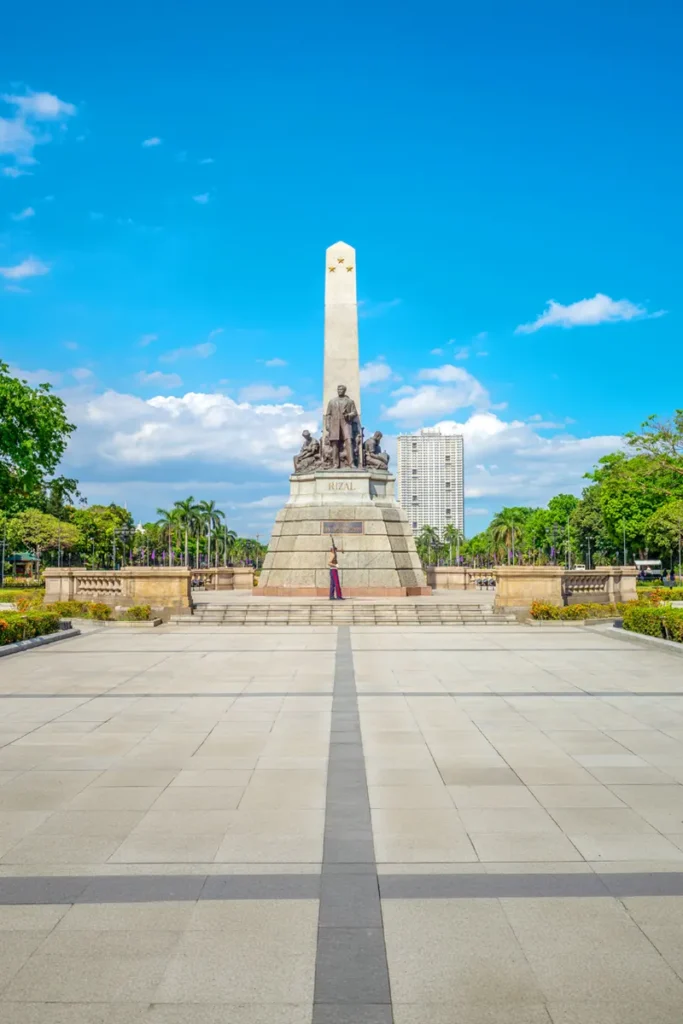
Manila
Manila Travel Guide 2026: Visa, Attractions & Hotels
-
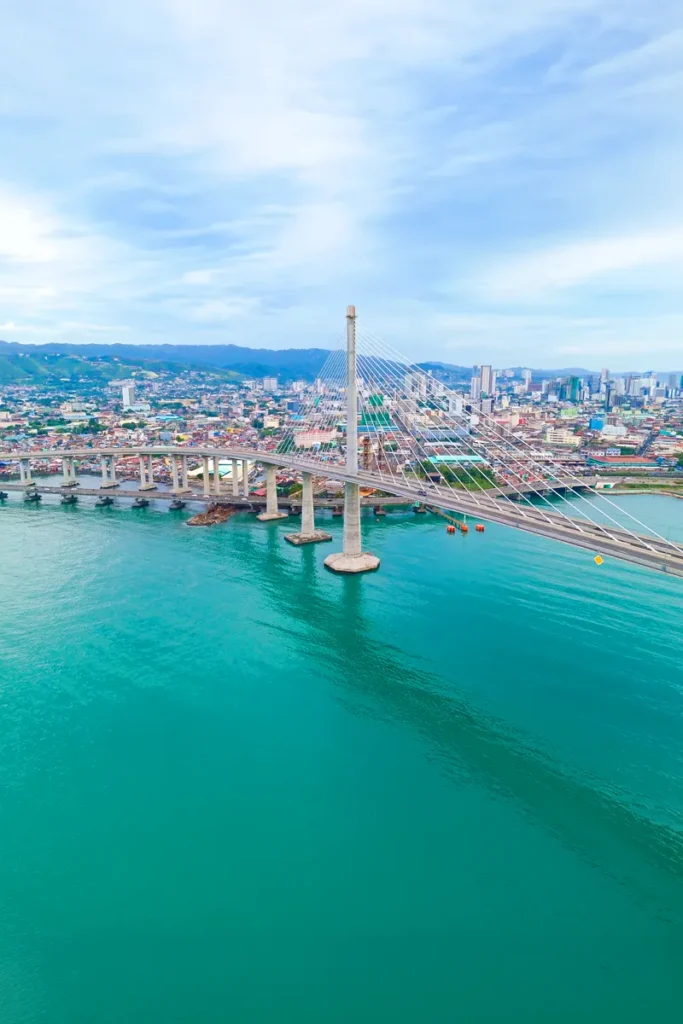
Philippines
Philippines Travel Guide 2026: Visa, Attractions & Tips
-

News
almatar and Cluster2 Airports Company Sign MoU to Develop Travel Solutions and Grow Umrah Passenger Traffic
-
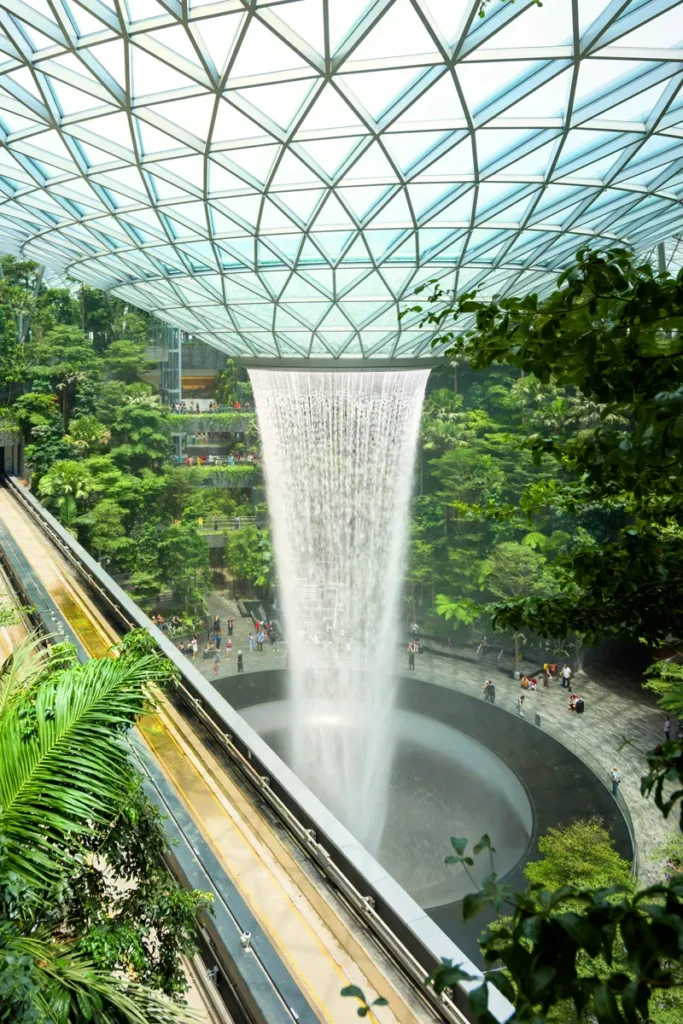
Explore Countries
Singapore Changi Airport Guide
-
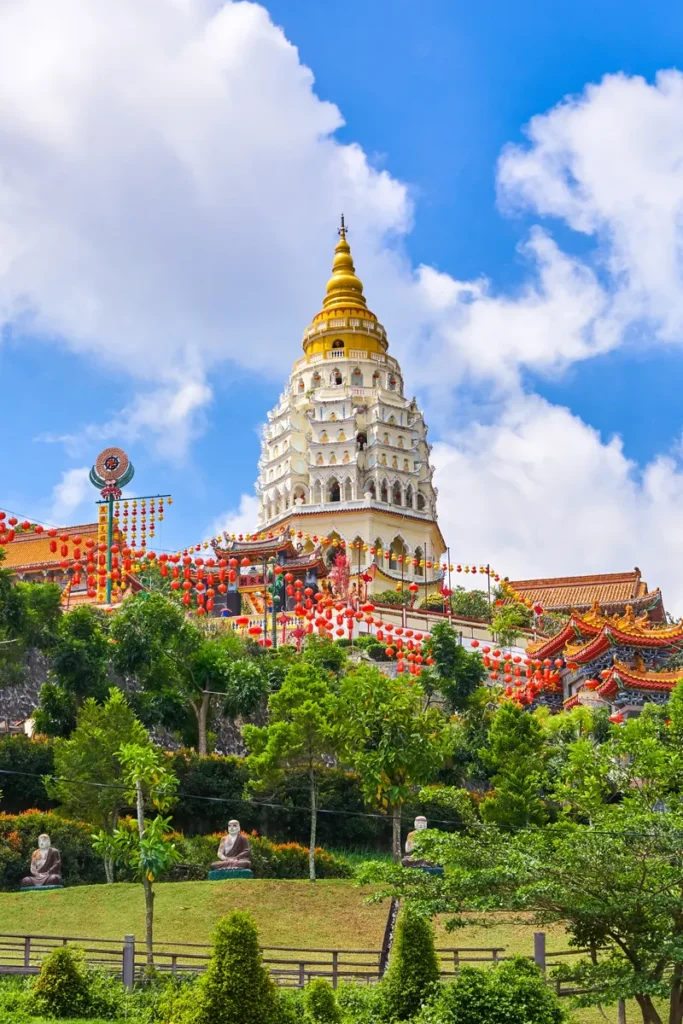
Explore Cities
Penang Travel Guide
-
Explore Cities
Langkawi Island Travel Guide