



















































Japan Travel Guide 2026: Visa, Attractions & Food
Japan has quietly become one of the most searched destinations among Gulf travelers over the past couple of years, and it is easy to see why. Riyadh to Tokyo is a single long-haul flight, the country feels completely safe to walk around at any hour, and the contrast between a five-hundred-year-old shrine and a Shibuya crossing shot straight out of a sci-fi film is exactly the kind of trip that photographs well and reads even better once you are actually there. For most first-time visitors from Saudi Arabia, the itinerary tends to follow a similar shape: a few days based in Tokyo, followed by a day trip or overnight stay near Mount Fuji before flying home or continuing on to Osaka and Kyoto.
Before any of that, though, there is one step every Saudi traveler has to clear first: the visa. This guide walks through the Japan e-visa process for Saudi nationals and residents, then covers how to plan the Tokyo to Mount Fuji leg of the trip, including where to base yourself and how to actually get out to Fuji without wasting a day of the holiday on transport.
Do You Need a Visa? The Japan e-Visa for Saudi Arabia
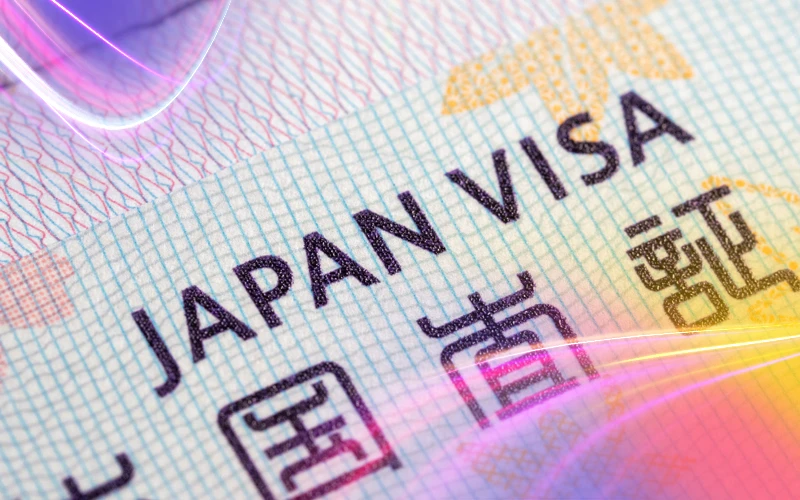
Yes. Saudi Arabia is not on Japan’s visa-exemption list, so every traveler, whether a Saudi national or a foreign resident living in the Kingdom, needs a visa before departure. The good news is that Japan has made this considerably easier since it added Saudi Arabia to its eVISA system: the paper application and in-person embassy visit that used to be required for a tourist trip have largely been replaced by an online process.
The Japan eVISA is an electronic tourist visa issued through Japan’s official government portal. It covers a single entry for tourism purposes, with a stay of up to 90 days, and it is currently available to residents of a short list of countries and regions, Saudi Arabia among them. It replaced most of the manual paperwork that Saudi applicants previously had to submit at the consulate, though business trips, study, and long-term stays still go through the traditional embassy visa route rather than the eVisa.
Who Can Apply: Japan Visa for Saudi Residents

The eVisa is open to Saudi nationals and to foreign residents of Saudi Arabia alike, which matters given how many people living and working in the Kingdom are not Saudi citizens. If you hold a valid iqama and are applying for a Japan visa for Saudi residents rather than as a Saudi national, the process is the same online application, but you will need to submit a couple of extra documents proving your legal residency status, listed below.
A few practical notes on eligibility:
- Your Saudi residency permit (iqama) should have at least six months of validity remaining from your planned entry date into Japan.
- Your passport needs at least six months of validity beyond your travel dates, plus a couple of blank pages.
- The eVisa only covers tourism. If your trip is for business, a conference, or visiting relatives, you will need to apply through the consular section instead.
- Minors need their own eVisa application; there is no exemption for children traveling with parents.
Documents You Will Need
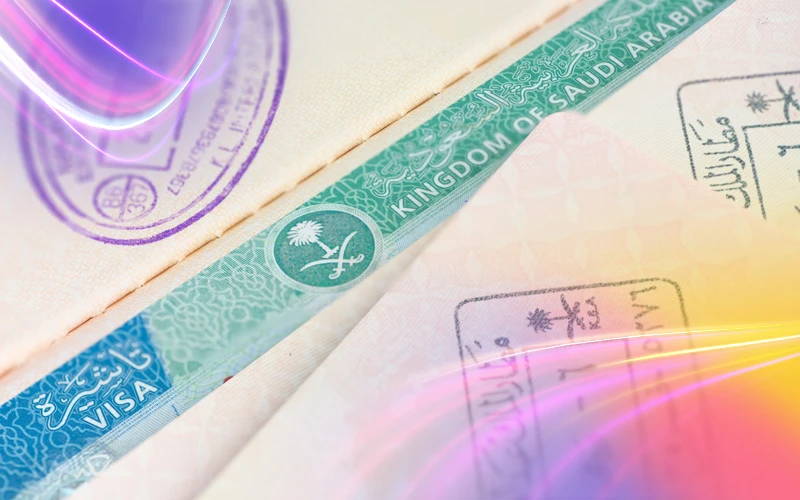
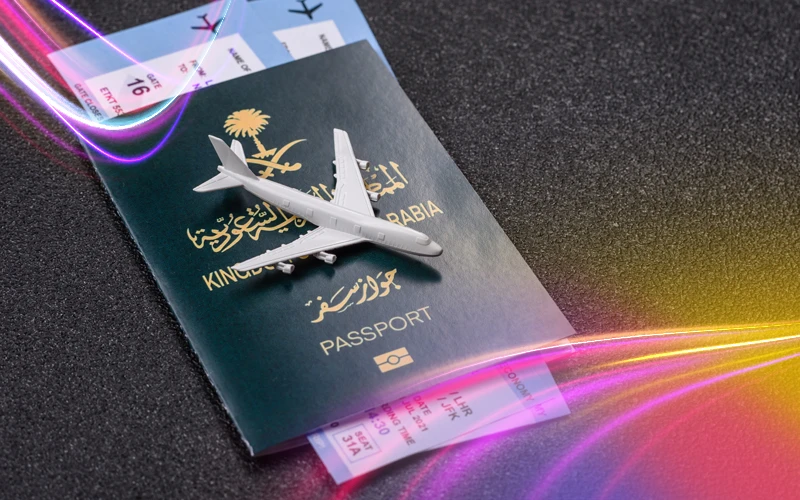
Requirements can shift slightly year to year, so always confirm the current list on the official JAPAN eVISA website before you apply, but as of now, Saudi applicants are typically asked for:
- A full copy of your passport (the bio-data page).
- A round-trip flight reservation, including any onward stops, in English.
- Hotel bookings covering the entire stay, matched to a detailed day-by-day travel itinerary.
- Proof that you can cover the cost of the trip: an employment and salary certificate, plus a bank statement covering the last three months, showing a healthy balance, from a Saudi bank.
- For non-Saudi residents: a copy of your iqama and your exit and re-entry visa.
- For family members traveling together: a guarantee letter and proof of relationship, translated into English, along with the ID or passport of whoever is financially guaranteeing the trip.
How to Apply for the Japan eVisa: Step by Step
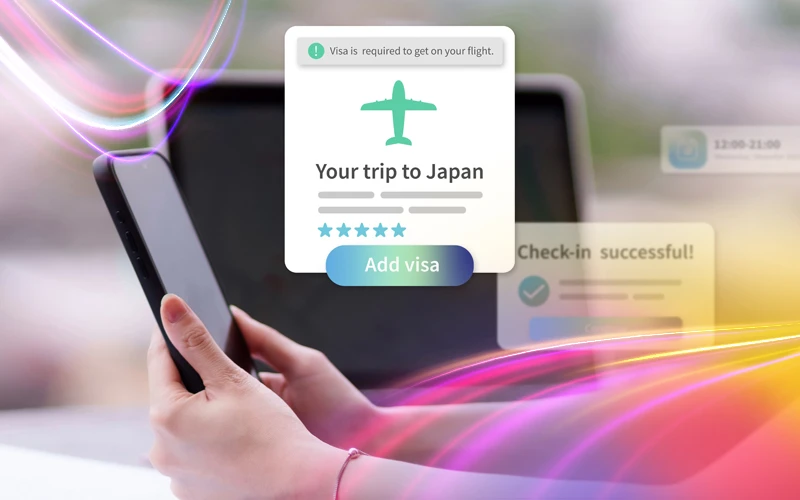
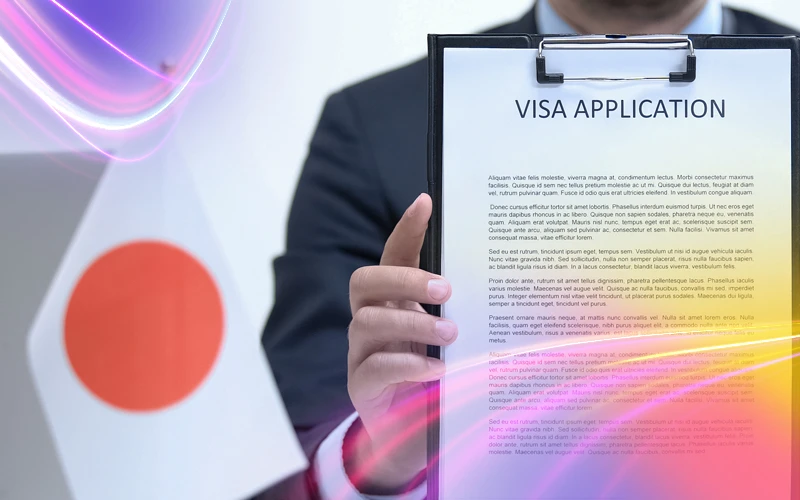
- Go to the official JAPAN eVISA website. Be careful here: there are copycat sites designed to look like the real portal, so apply only through the government link, not through a third-party site claiming to process eVisas for a fee.
- Create an account and fill in the application form with your personal, passport, and travel details.
- Upload the required documents listed above as clear PDF or image files.
- Pay the visa fee online by credit or debit card. Fees are modest for a tourist visa and are set by Japan’s fiscal year, so check the current amount on the portal rather than relying on an old figure.
- Wait for processing. The standard turnaround is around five working days, though it can run longer, especially ahead of spring and autumn, Japan’s two busiest tourist seasons, so it is worth applying three to four weeks before you travel rather than the week before.
- Once approved, you will receive a Visa Issuance Notice that you log into and display on your phone at the departure airport. This has to be viewed live on the eVisa website through an internet connection: a screenshot, PDF download, or printout is not accepted, so make sure you have working data or Wi-Fi when you check in.
A Note on the Traditional Visa
If your trip does not fit the tourism-only, 90-day, single-entry mold, such as business travel, a multiple-entry visa, or a stay tied to work or study, you will still need to apply in person through the Japanese Embassy or the Consulate-General in Jeddah, with the fuller set of documents that route requires. For most Saudi travelers planning a Tokyo and Mount Fuji holiday, though, the eVisa covers everything needed.
When to Visit: Matching the Trip to the Season

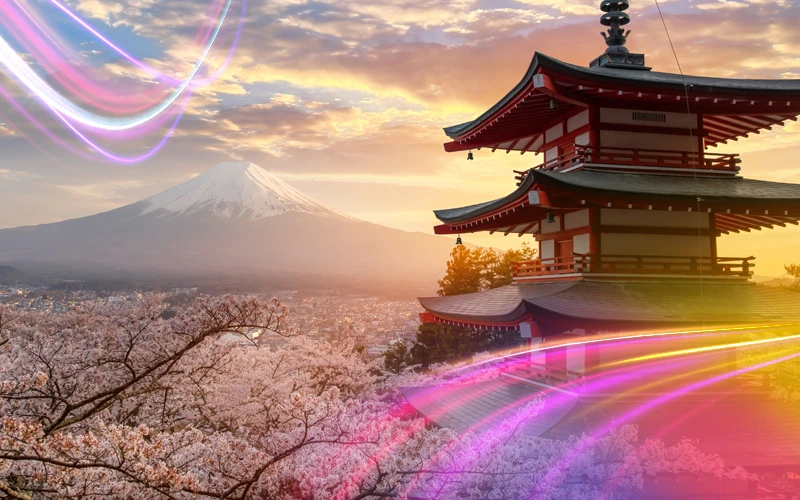
Japan’s climate swings more than most Gulf travelers expect, and the season you pick shapes the whole trip, especially the Mount Fuji leg, since the mountain is far more likely to be visible on clear, dry days than during Japan’s humid summer haze.
- Spring, late March through early May: cherry blossom season, the single most popular window for GCC visitors and the reason so many Instagram and TikTok travel accounts time their Japan trips for these weeks. Book hotels well in advance, since this is peak demand.
- Autumn, late September through November: cooler, drier air and red and gold foliage around Fuji and Hakone, with noticeably fewer crowds than spring.
- Summer, June through August: hot and humid, and Mount Fuji’s summit is frequently wrapped in cloud, though this is climbing season on the mountain itself if that is the goal.
- Winter, December through February: cold but clear, often the best odds for an unobstructed view of snow-capped Fuji from Tokyo or the Fuji Five Lakes, and a quieter, cheaper time to travel.
Whichever season you choose, keep it clear of Ramadan if that would conflict with your travel plans, and check the Saudi school calendar if you are traveling with children, since half-term and summer breaks push prices up across the board.
Tokyo: Where to Base Yourself
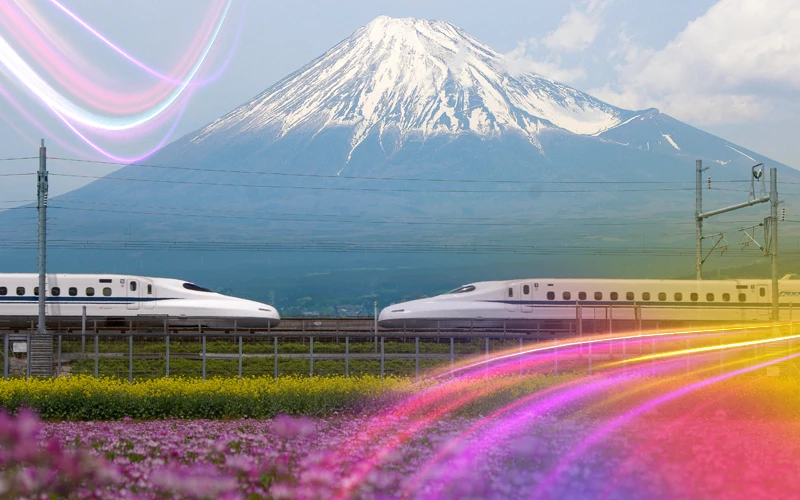
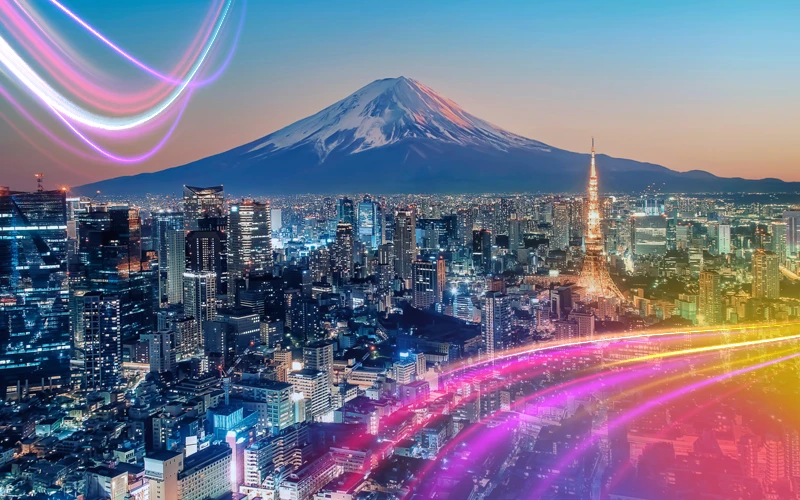
Tokyo is less a single city than a cluster of distinct districts stitched together by an excellent train network, so where you stay matters more than it would in most capitals. For a first trip that also includes a Mount Fuji excursion, three areas cover almost everyone’s needs.
Shinjuku: The Practical Choice
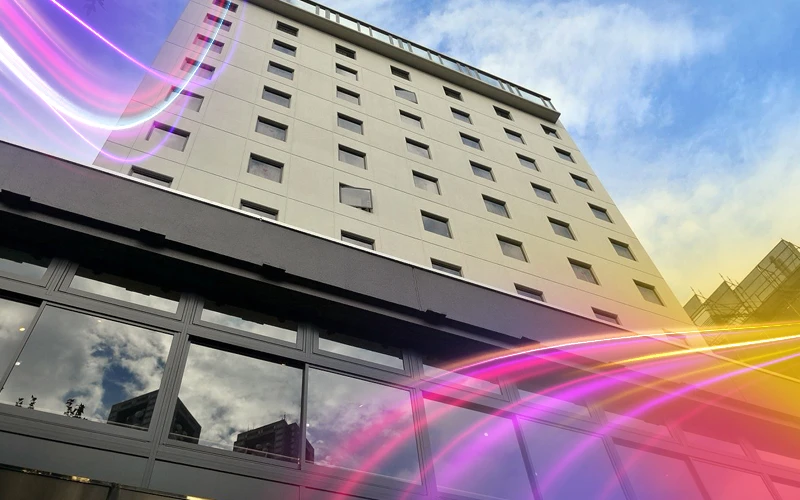

Shinjuku is the single most convenient base if Mount Fuji is on the itinerary, since the direct highway buses to the Kawaguchiko and Fuji Five Lakes area depart from Shinjuku Station. It is also one of Tokyo’s best neighborhoods for halal dining and has a nearby Islamic cultural center, which makes daily logistics simpler for Muslim travelers. The Knot Tokyo Shinjuku is a well-located option here if an early bus departure to Fuji is part of the plan.
Asakusa: Culture, Temples, and Halal Food
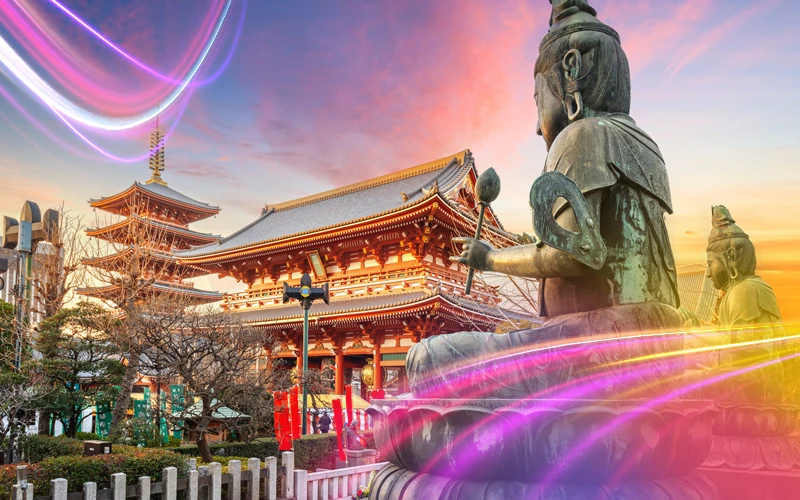

Asakusa is Tokyo’s most traditional district, built around Senso-ji Temple, and it has quietly become the city’s strongest halal food neighborhood, with certified restaurants, a nearby mosque, and a genuinely walkable, low-key atmosphere compared to Shibuya’s crowds. Palace Japan Hotel sits a short walk from Senso-ji and the Tokyo Skytree, making it a solid pick if temples, halal food, and an easier pace matter more than nightlife.
Shibuya and Shinagawa: For Shopping, Views, and Shinkansen Access
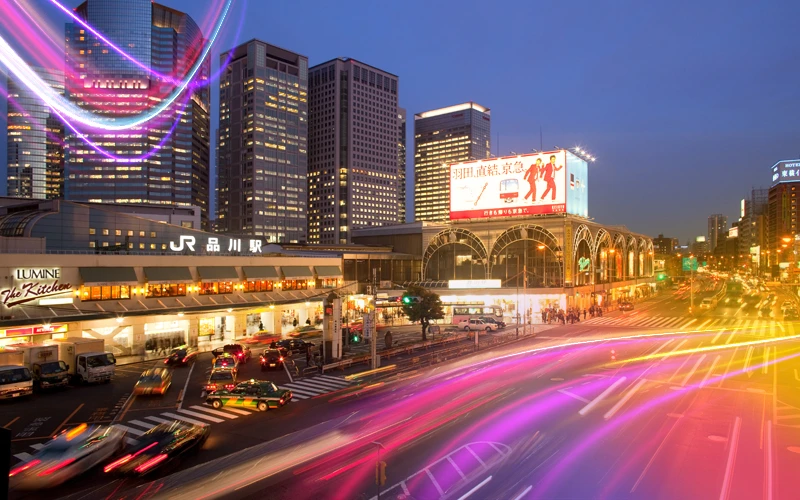
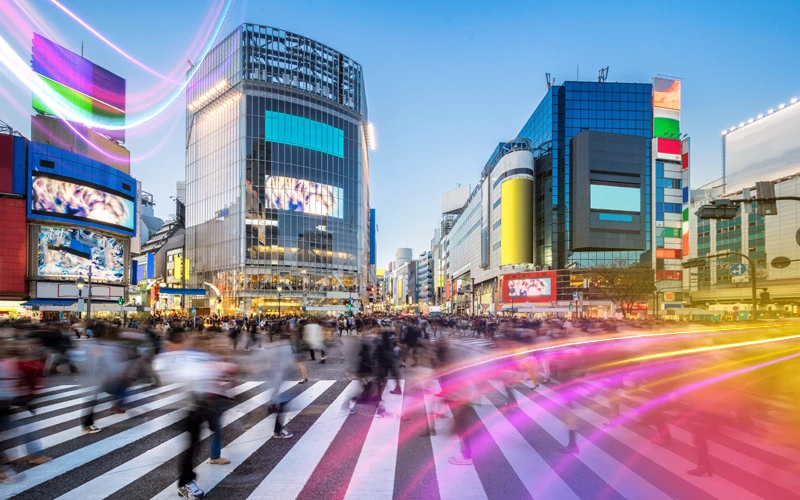
Shibuya is Tokyo’s high-energy core, good for shopping, the famous crossing, and nightlife views. Shibuya Tokyu REI Hotel and Tokyu Stay Shibuya both put you a few minutes from the crossing itself. If a same-day Shinkansen connection toward Hakone, Kyoto, or Osaka is part of the plan, Super Hotel Shinagawa Aomono Yokocho is worth a look, since Shinagawa Station is one of Tokyo’s main bullet train hubs.
For a wider range of options across all of these districts, and everything in between, the full Tokyo hotels page on almatar lets you compare by neighborhood, price, and rating in one place.
Halal Food and Prayer Facilities in Tokyo
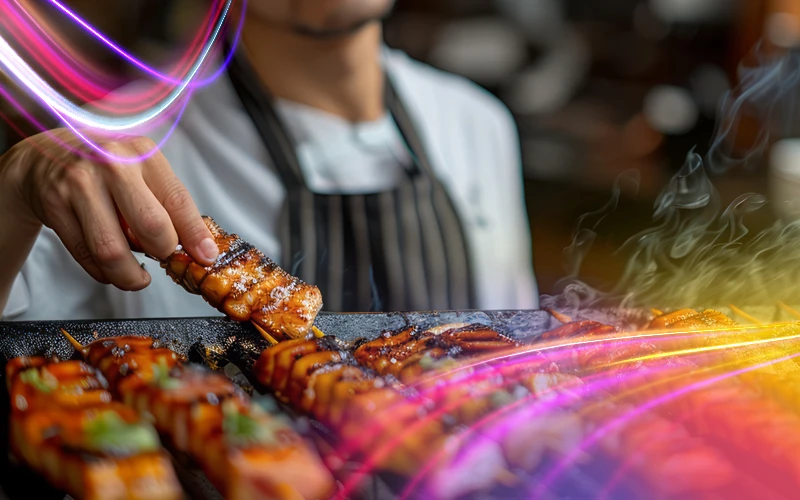
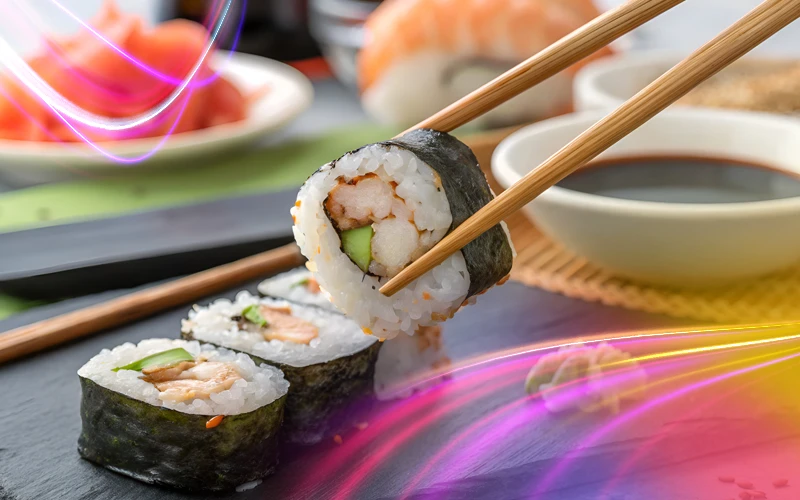
Tokyo’s halal scene has expanded fast: the city now has several hundred halal-certified or Muslim-friendly restaurants, concentrated around Asakusa, Shinjuku, Shibuya, Shin-Okubo, and Ikebukuro, the last of which has earned the nickname Little Asia for its cluster of Indonesian, Pakistani, Bangladeshi, and Middle Eastern restaurants near mosques and halal grocery shops. Tokyo Camii, a short walk from Yoyogi-Uehara Station in Shibuya ward, is the city’s largest mosque and holds all five daily prayers. Prayer rooms with ablution facilities are also standard at both Narita and Haneda airports, and many major stations and department stores, including Tokyo Station and Takashimaya, have dedicated prayer spaces. A halal restaurant finder app is genuinely worth downloading before you land, since it also maps the nearest prayer room in real time.
From Tokyo to Mount Fuji: Getting There
Mount Fuji sits roughly 100 kilometers southwest of Tokyo, and getting close to it is straightforward, but it helps to pick a route before you arrive rather than figuring it out on the day.
- Direct highway bus: buses run from Shinjuku, Shibuya, and Tokyo Station straight to Kawaguchiko Station, the main gateway to the Fuji Five Lakes, in roughly two hours. This is the simplest option and needs no transfers.
- Train: take a limited express or the Shinkansen from Shinjuku or Tokyo Station to Otsuki or Mishima, then change to a local line or bus toward Kawaguchiko or the Hakone area. Slightly more scenic, with a bit more flexibility on timing.
- Hakone route: if hot springs are more the draw than the lakes, Hakone is about 90 minutes from Tokyo by train and offers Fuji views from Lake Ashi alongside its ryokan and onsen culture.
- Rental car: gives the most flexibility for stopping at viewpoints along the way, at roughly ninety minutes to two hours depending on the route and traffic.
Most travelers treat Fuji as either a long day trip from Tokyo or a one to two night stay in the Kawaguchiko or Hakone area, which also means you get a chance at the mountain at sunrise and sunset, when the sky is more likely to be clear.
What to Do Around Mount Fuji
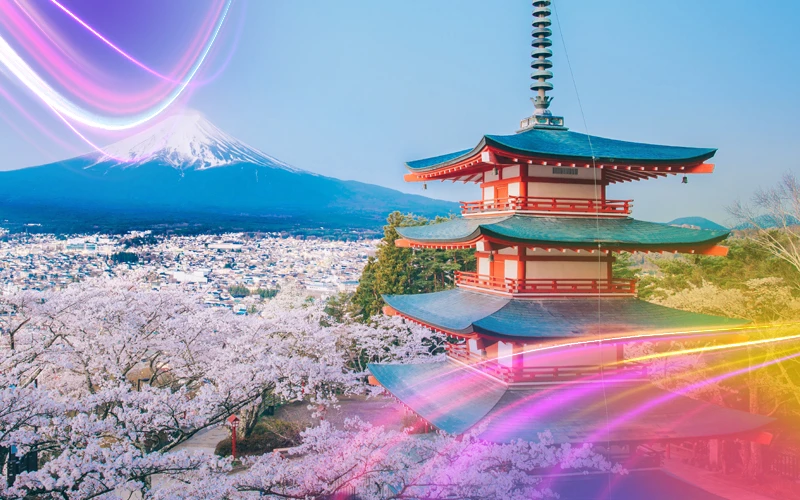

Mount Fuji itself, at 3,776 meters, is Japan’s highest peak and an active but currently dormant volcano, ringed by the Fuji Five Lakes: Kawaguchiko, Sai, Motosu, Shoji, and Yamanaka. You do not need to climb it (the official climbing season only runs during summer) to have a full day around it. A few highlights worth building a route around:
- Chureito Pagoda in Fujiyoshida: the classic postcard shot of the five-story pagoda framed against Fuji, especially striking during cherry blossom season.
- Lake Kawaguchiko: cable car rides up Mount Tenjo for panoramic views, plus lakeside walks and the Kawaguchiko Music Forest museum.
- Oshino Hakkai: a small, quieter village built around eight spring-fed ponds, with Fuji visible in the background on clear days.
- Hakone: a pirate-ship boat cruise across Lake Ashi, the Hakone Open-Air Museum, and the Owakudani volcanic valley reached by ropeway.
- Gotemba Premium Outlets: a large outlet mall near the mountain’s base, popular for a shopping stop on the way back to Tokyo.
If the weather forecast looks unclear, note that Fuji is famously shy: it is only fully visible on a fraction of days each year, so build in a second attempt if your schedule allows, rather than pinning everything on a single visit.
Practical Tips for Saudi and Gulf Travelers
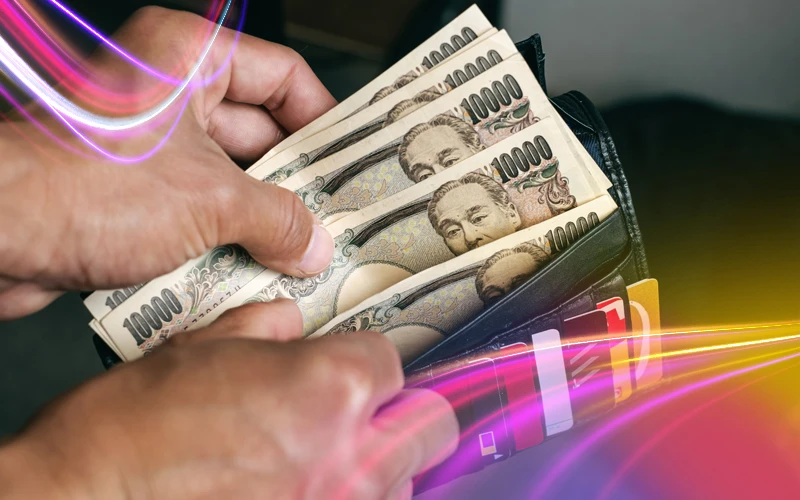
- Cash still matters. Japan is far more cash-reliant than the Gulf; carry yen for smaller restaurants, temples, and rural areas around Fuji, even though cards and mobile payments are increasingly accepted in central Tokyo.
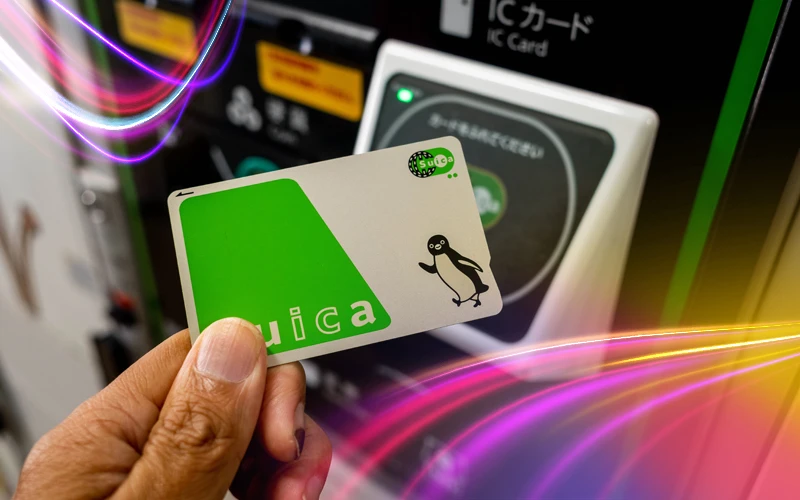
- Get an IC card (Suica or Pasmo) as soon as you land. It works on nearly every train, subway, and bus, and saves constantly buying paper tickets.
- Halal certification varies. Apps that map halal and Muslim-friendly restaurants alongside prayer rooms are more reliable than guessing from a menu, particularly outside central Tokyo.
- Pack for layers. Weather can shift quickly around Fuji and in the mountains even when Tokyo feels mild.
- Keep your Visa Issuance Notice accessible with data or Wi-Fi at the airport, since it must be viewed online rather than shown as a saved file.
A Simple Six-Day Route
- Day 1 to 3: Tokyo, split between a central base like Shinjuku or Asakusa, covering Senso-ji, Shibuya, Shinjuku Gyoen, and a halal food crawl through Asakusa or Ikebukuro.
- Day 4: Travel to Kawaguchiko by direct bus, check into a lakeside hotel, and catch sunset over the lake if the sky is clear.
- Day 5: Chureito Pagoda in the morning, the Mount Tenjo cable car, then Oshino Hakkai in the afternoon.
- Day 6: Return to Tokyo via Hakone for the Lake Ashi cruise and Owakudani ropeway, or head straight back for a final evening of shopping before your flight home.
Frequently Asked Questions
Do Saudi citizens need a visa for Japan?
Yes. Saudi Arabia does not have visa-free access to Japan, but Saudi nationals can apply for the Japan e-visa, which covers tourism for a single entry and stays of up to 90 days.
Can non-Saudi residents of Saudi Arabia apply for the Japan eVisa?
Yes. A Japan visa for Saudi residents who are not Saudi nationals follows the same online eVisa process, with an added requirement to submit a copy of your iqama and your exit and re-entry visa alongside the standard documents.
How long does the Japan eVisa take to process for Saudi applicants?
The standard processing time is around five working days, though it can take longer, particularly during busy travel seasons, so applying three to four weeks ahead of your trip is a safer margin than applying the week before.
Is Mount Fuji easy to visit as a day trip from Tokyo?
Yes. Direct buses from Shinjuku to Kawaguchiko take about two hours each way, which makes a long day trip possible, though staying one night in the Fuji Five Lakes or Hakone area gives better odds of seeing the mountain without cloud cover.
Once your eVisa is approved and your dates are set, the next step is locking in where you will stay. Browse and compare hotels in Tokyo on almatar to find a base that matches your route between the city and Mount Fuji.
You might also like
-

Philippines
Filipino Food: A Traveler’s Guide to Local Cuisine
-
Explore Countries
Siargao Island: Beaches, Activities & Hotels
-
Philippines
Philippine Islands: Boracay, Palawan & Cebu
-
Manila
Manila Travel Guide 2026: Visa, Attractions & Hotels
-
Philippines
Philippines Travel Guide 2026: Visa, Attractions & Tips
-

News
almatar and Cluster2 Airports Company Sign MoU to Develop Travel Solutions and Grow Umrah Passenger Traffic
-
Explore Countries
Singapore Changi Airport Guide
-
Explore Cities
Penang Travel Guide
-
Explore Cities
Langkawi Island Travel Guide